

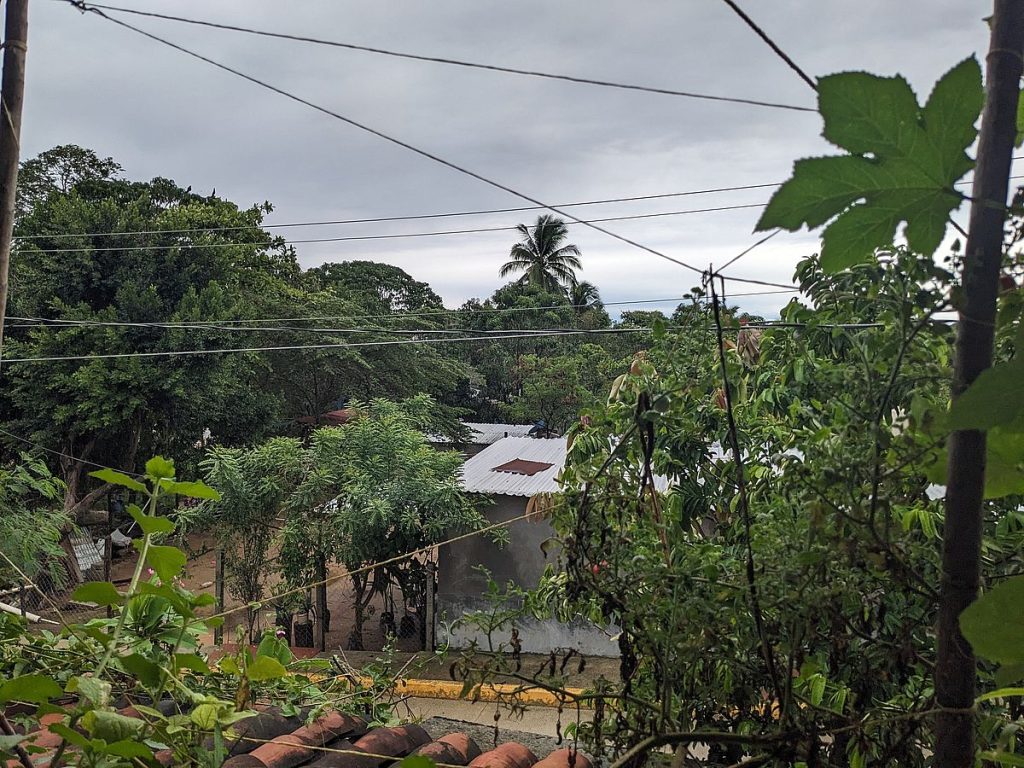
June 8, 2026, Santa María Huatulco, Oaxaca, Mexico. It rained hard all morning and a good part of the afternoon as the skirts of Tropical Storm Boris came inland from the Pacific. The rain has finally stopped now, but the wind has arrived, in billowing gusts that sigh through the mangoes and coconut palms of our barrio.
The barrio is a noisy place: roosters, motorcycles, all of the sounds of dogs and humanity. Here isn’t normally where I slow down to notice nature. But today, after spending all day inside reading, I’m tired and cooped up. And so, inspired to notice this place anew, I climb the steep stairs up to the balcony with my parabola and binoculars, curious, ready to pay attention to the birds and other goings-on of nature around me.
Noticing my barrio
A male great-tailed grackle (Quiscalus mexicanus) lands in the top of the mango tree across the street, then another shows up alongside him. Both hold their heads pointed skyward in a display pose that looks very uncomfortable. Are they going to sing?
The Coca-cola truck arrives and parks in front of the corner store. Motorcycles pass by. Nothing. Finally, one male gives a single piercing whistle.
The Coca-cola truck starts up again and roars past, climbing up the sloping street in front of our house. The grackle whispers a little bit.
The wind has died down and a tentative drizzle has begun again. Other grackles and a yellow-winged cacique (Cassiculus melanicterus) sing in the distance as another motorcycle growls past.
The tegoche and the grackle
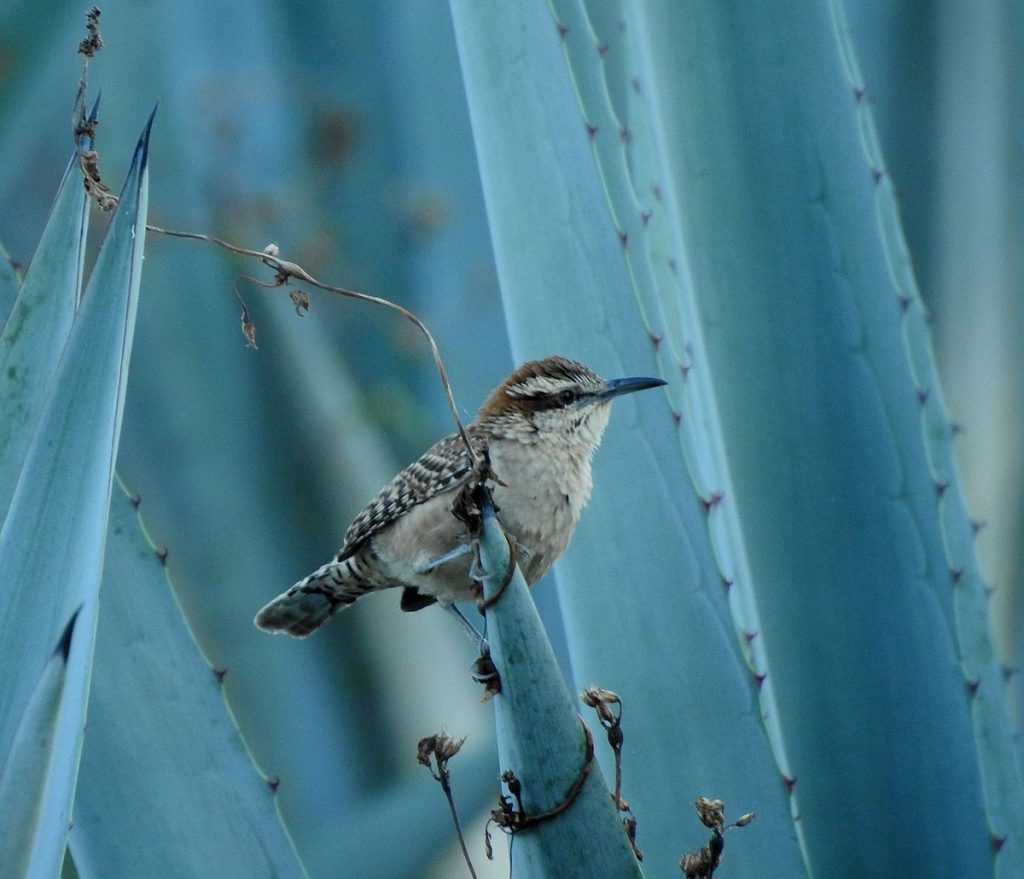
A russet-naped wren (Campylorhynchus humilis), or tegoche, gives his rolling song from the tangle of the passionfruit vine I planted in front of the house last year. Among so many loud noises, is it just coincidence that the common birds of the barrio—the tegoche, the grackles, the yellow-winged caciques—make a lot of noise, too?
Finally, a great-tailed grackle gives me a show. Another male, or the same one, perhaps. He’s a bit closer now, in the top of another tree, a species I don’t recognize with dark green, leathery, elliptical leaves. He gives a few chuck calls, then launches into ecstatic, unmusical song, fanning his huge tail and quivering his wings at shoulder height.
I wonder about the grackles. This afternoon I’ve seen several females flying past like arrows with food in their beaks: a sure sign that there are nestlings or fledglings around. But as common as these birds are in so many of Oaxaca’s towns, I realize I don’t even know where they build their nests.
Urban ecology
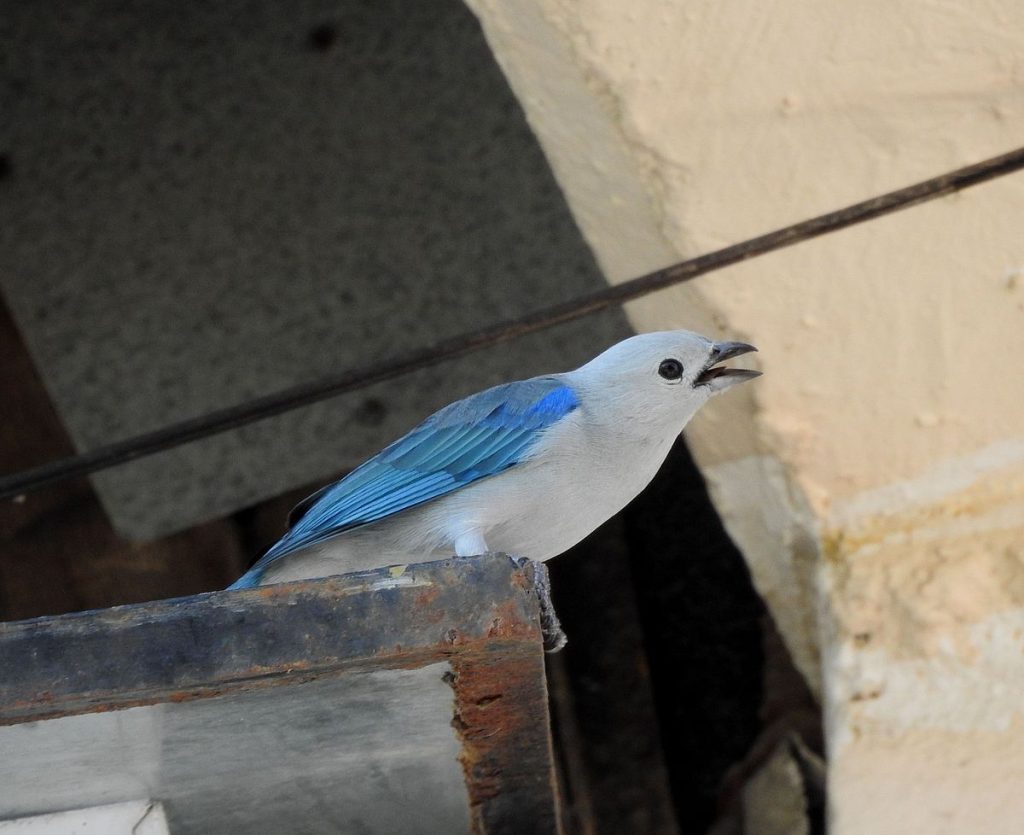
Later, as I ride downtown with Carito on our motorcycle, I keep thinking about urban ecology. The Río Huatulco is rain-swollen, the color of oxidized clay. Downtown, gray-breasted martins (Progne chalybea) are darting over the rooftops and lined up on the electric wires. I’ve seen them once in a while in our barrio, but very infrequently. Are they lacking good nooks and crannies for nesting there? I also think about the blue-gray tanagers (Thraupis episcopus), another highly urban bird in this region. I often find these tanagers singing from perches among the dense buildings and traffic of downtown. But I’ve never found them in our barrio, and now I wonder why.
I read up on great-tailed grackles in Birds of the World. In this sort of urban context, I learn, the females typically build their basket-like nests high in big trees. The males I watched this afternoon were doing their typical territorial displays, it turns out: a strong hint that there is at least one nest in those trees where they were perching, right across the street from our house. Territorial males defend nesting trees. Females decide where to nest, often switching trees (and mates) from one nesting attempt to the next.
Richard Louv: Noticing
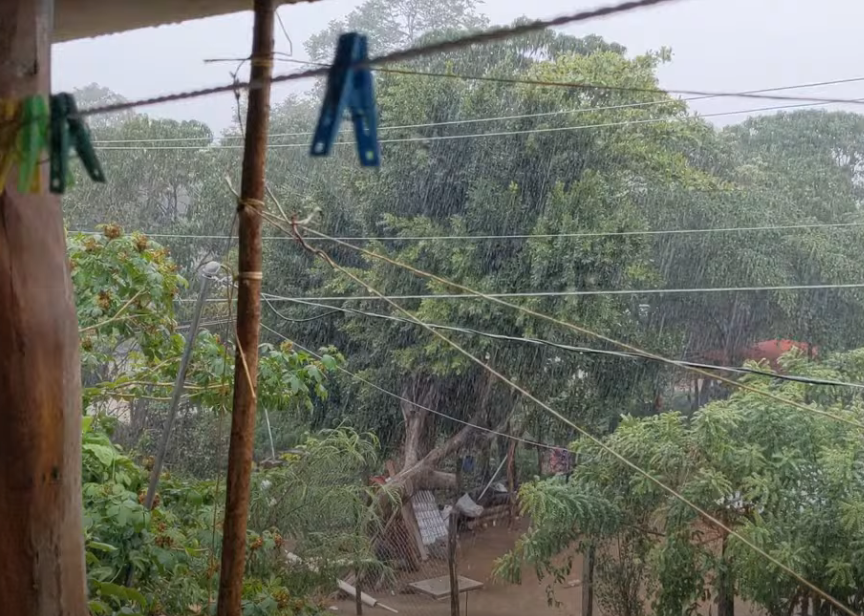
It was Richard Louv who inspired me to slow down and notice the ecology of our barrio. An internationally acclaimed author who has written extensively about nature and its importance in our lives, Richard’s newest book, just-published this June, is titled Noticing: Intimate Encounters with the Natural World. As the rains of Tropical Storm Boris drummed on our tin roof this morning, I was reading Noticing. Let’s hear from Richard, who was kind enough to narrate some excerpts for me:
Deep noticing can improve our physical, mental, and spiritual health and attaches us more deeply to place and to our neighbors of all species. It can illuminate and deepen known science and lead us to ask better scientific questions. It can enrich and inform our art and music and architecture. It can build compassion and our sense of reciprocity with other kinds of life.
Some days, it’s learning about the biology of great-tailed grackles among the traffic. To pause, to listen, to notice: to remember the vitality of life, wherever we find ourselves on this beautiful, fragile, resilient planet.
Otherworlds
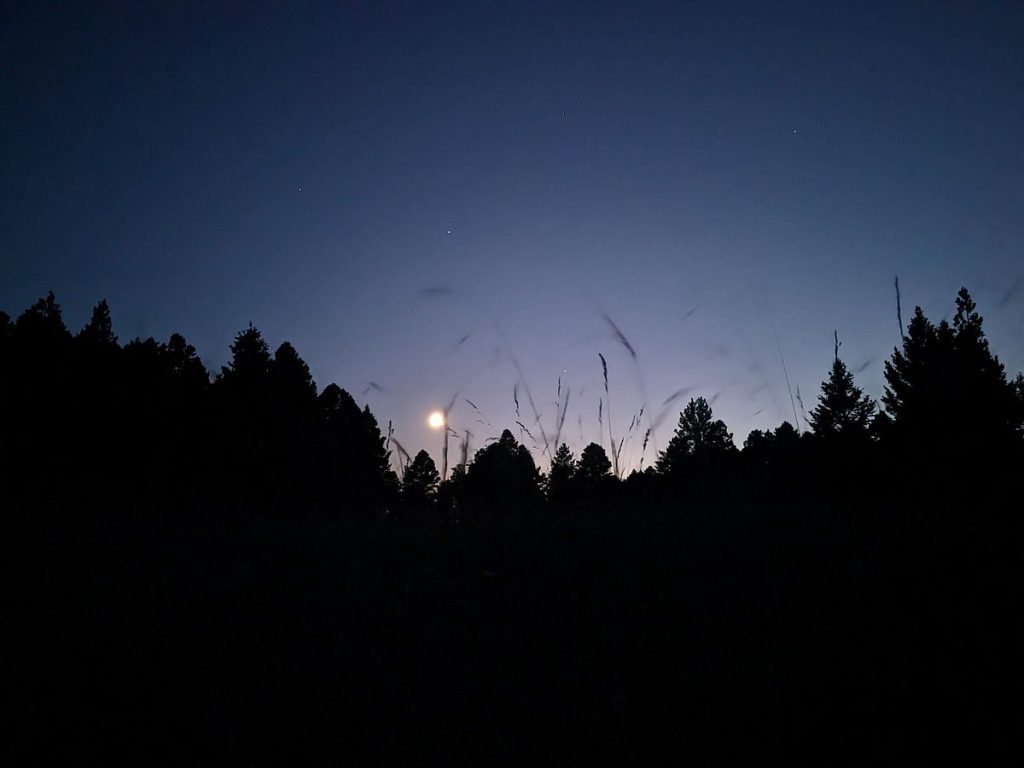
From encountering mountain lions in his backyard to contemplating the ripples of rainwater in the hollow of an oak, it is clear that Richard is a passionate, joyful observer of nature. He invites us to slow down and notice, to cultivate a childlike curiosity, to make space in our lives for wonder:
Otherworlds exist all around us. Most might appear to be ground fog, faint singing, or fleeting shadows moving through or above the trees. These worlds emerge from under the bark, from wind and clouds, from deep beneath our feet, but cannot be seen by eyes alone. The shapes, sounds, and perceptions are created by biological life and geological forces, or they may be imagined or projected from within us.
These otherworlds—the mycelium messages whispering through forests, the dance of predators and prey, the geopolitics of ants, the electrical fields of plants and bees, the nighttime biosphere of bioluminescence, our own glittering bodies—these and other realms have always existed. So easily dismissed as superstition, the feelings of awe they produce are captured in stories and myths inspired by living, breathing creatures; wind, rain, and snow; floating seeds. And falling embers.
The corn fields of June
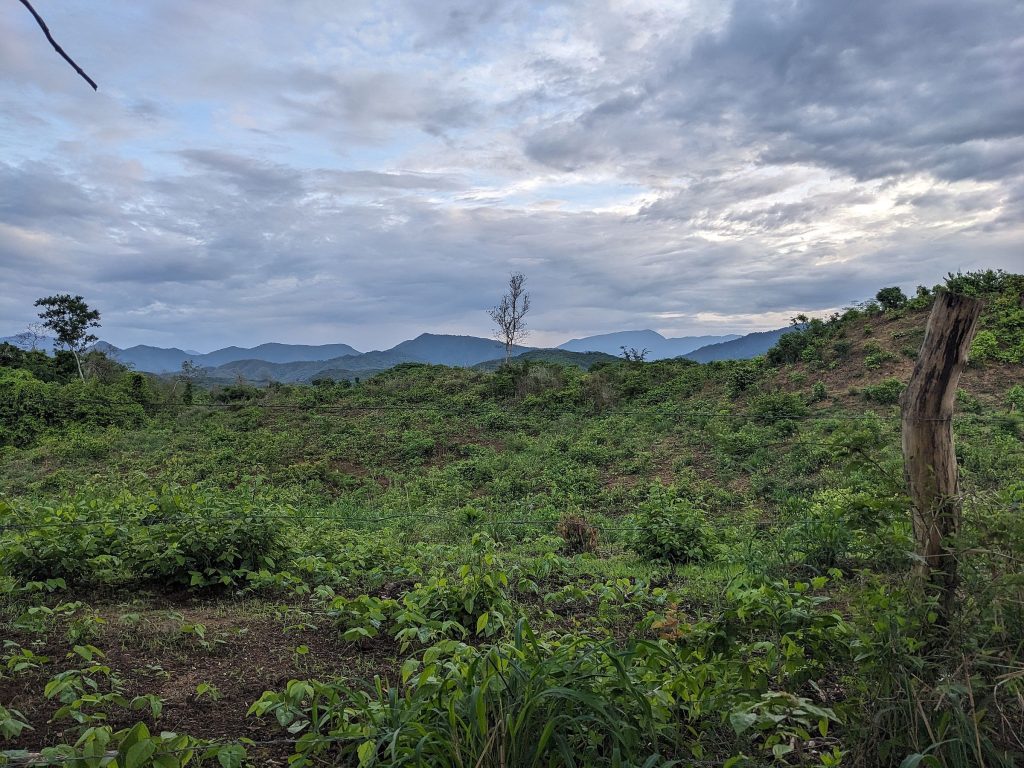
June 12. A tropical kingbird (Tyrannus melancholicus) gives his dawn song from a lone hormiguero tree (Cordia alliodora) among fallow corn fields made vibrant green by the rains. It’s quiet here: no motorcycles, no Coca-cola trucks. Just fields being reclaimed by a green profusion of grass tussocks, vines, and the bean-like plant known locally as nescafé. An expansive sky, scudded with unsettled gray clouds. Green fading to blue where the endless ridges of the Sierra Sur rise skywards. Half an hour ago, lightning flashed in the darkness over the Pacific Ocean.
The clouds gradually soften as the morning light increases. The sun comes out. A blue-black grassquit (Volatinia jacarina) is doing his courtship display on a grassy slope and he lets me get close, so close that I can hear the flutter of his wings as he hops into the air and gives his song—an unmusical sizzle like a drop of water on a hot comal.
Amazons and bobwhites
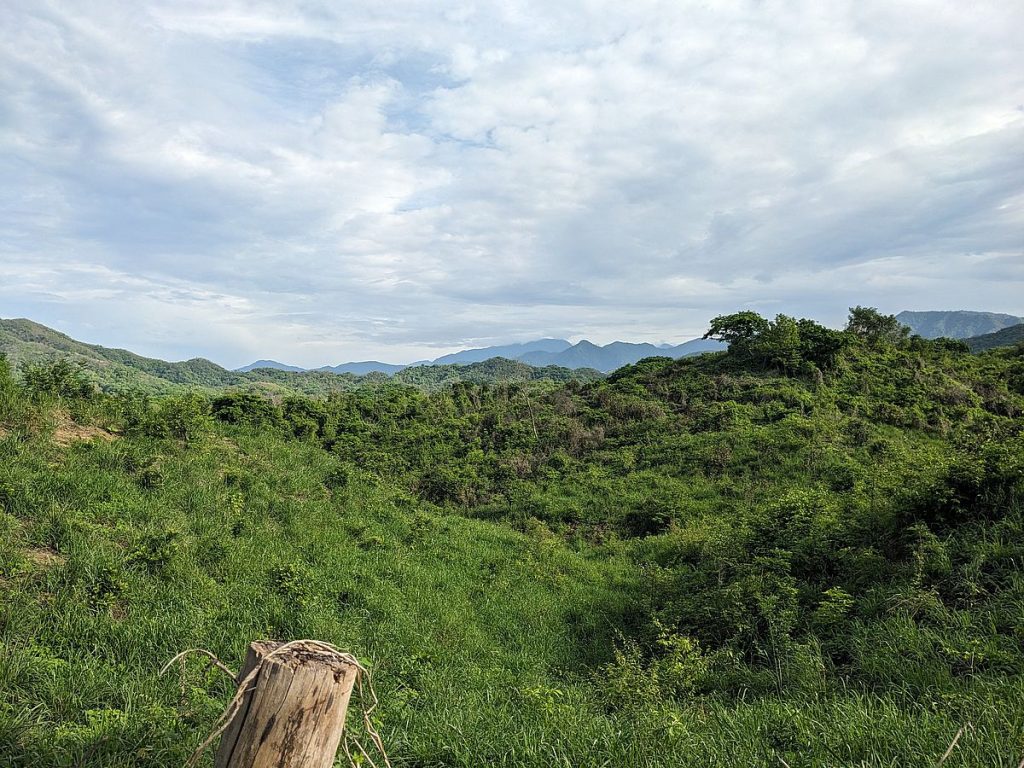
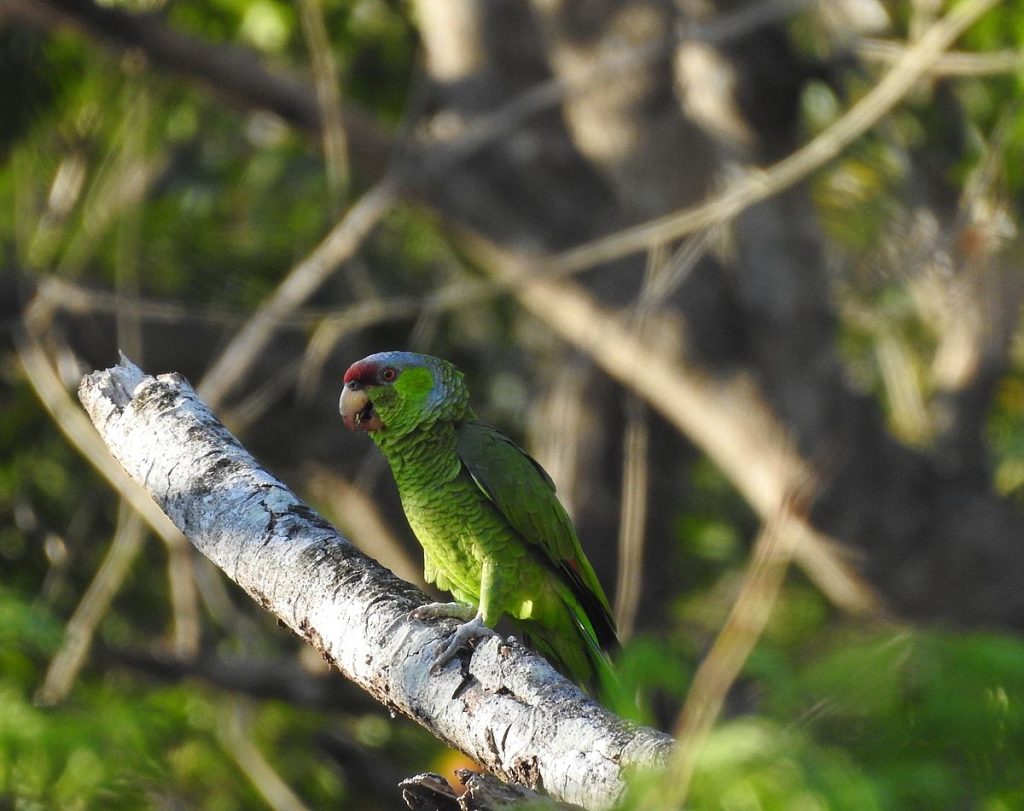
From time to time, I hear the unmistakable screams of a flock of lilac-crowned amazons (Amazona finschi) as they pass high overhead, bound for somewhere in the Sierra. Every time I hear them, I try to find the distant flock and count them. One of the largest parrot species of Mexico’s Pacific coast, the lilac-crowned amazon is at great risk from the pet trade, habitat loss, and climate change. I’m happy to see so many of them today.
A yellow-green vireo (Vireo flavoviridis) is giving his monotonous singsong from a spreading guanacastle tree (Enterolobium cyclocarpum) where a small pineapple field transitions to overgrown forest edge. And there, beyond the vireo, is the unmistakable song of a northern bobwhite (Colinus virginianus) quail: bob-WHITE!
I walk closer, intent on the gully where the bobwhite is singing. He sounds louder now, belting out his bob-WHITE! from his hiding spot. In the past three winters that I’ve spent here, I’ve never seen nor heard a bobwhite. His song is another sign of the rainy season, this time of nesting, singing, and growth.
Vitality and loss
It’s extra-special because I’ve heard that these quail have become rare here in recent years. Local wisdom is that many have died from eating pesticide-treated corn seed, as industrial production has increasingly replaced the traditional practice of saving untreated seed and planting native corn varieties. The bobwhite sings once more, then falls quiet.
To spend time in nature is to witness, again and again, the incredible vitality of the living world. At the same time, in the midst of all the converging environmental challenges of our time, it is to experience profound loss. Let’s hear again from Richard:
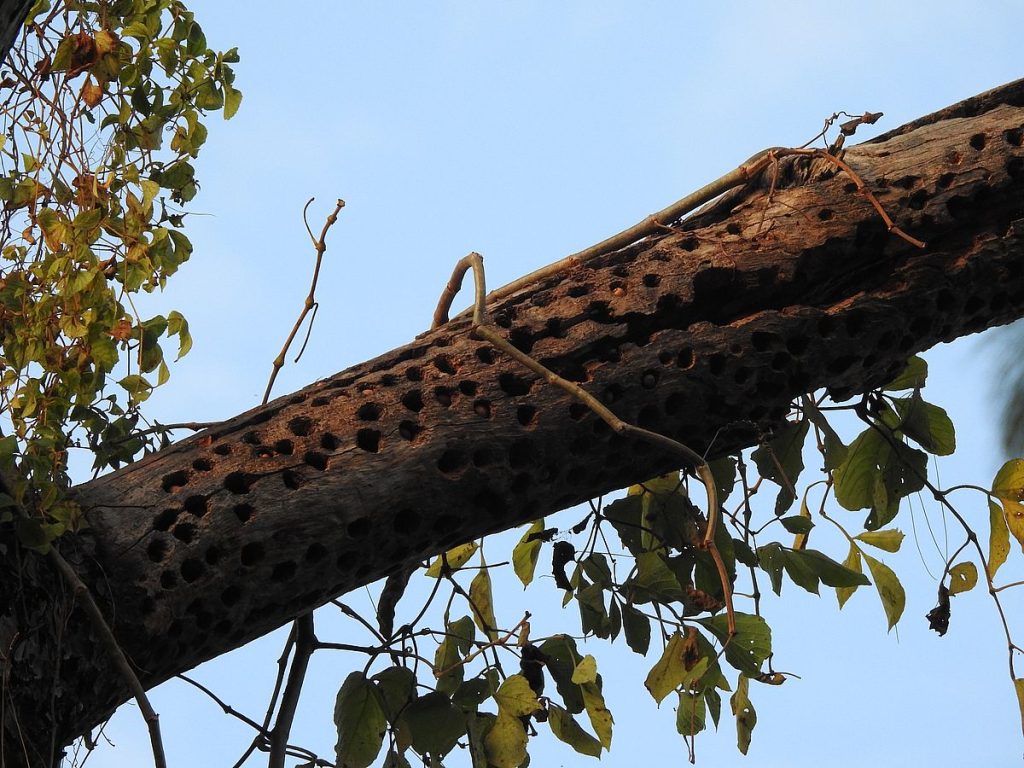
When I moved here, I convinced myself that escape from the city was a form of transcendence. As it has turned out, I feel a greater sense of loss here than I did in the city. In the city, the loss of nature is muted by freeway noise and distraction. Here, we cannot escape it.
Every year, we see more old oak skeletons leaning, crouching, and then falling to their knees. Oak bones are scattered throughout the forest like tusks in an elephant graveyard. The life of the acorn woodpecker is linked to that of the oaks. The birds’ habitat shrinks each year. As the oak groves vanish, so will the woodpecker dynasties, regardless of how much wealth they have stored in their granary banks, gutters, or vent pipes. Can we be a transcendentalist in a world with no escape from such threats? Experiencing nature brings us closer to beauty, wonder, and creation, but that closeness makes the ultimate threat even harder—because we become more intimately aware of what we are losing.
Imagining a future
Perhaps we need a new transcendentalism, a set of beliefs for this age—not an acceptance of destruction but a determination on both the global and the local scale not only to conserve what remains but also to create new natural environments.
When we consider our path to the future, we usually think of the way technology shapes what lies ahead, or we consider war, charismatic leaders, education, religion, or the comet that might come out of nowhere shattering the future. We think primarily about our own species, considering ourselves at the pinnacle of all life. We mainly wonder what will happen to us.
What would a future be like in which the welfare of all species was considered—a future in which we would recognize that we are part of nature, that all of nature is within us, and that we are part of a larger family?
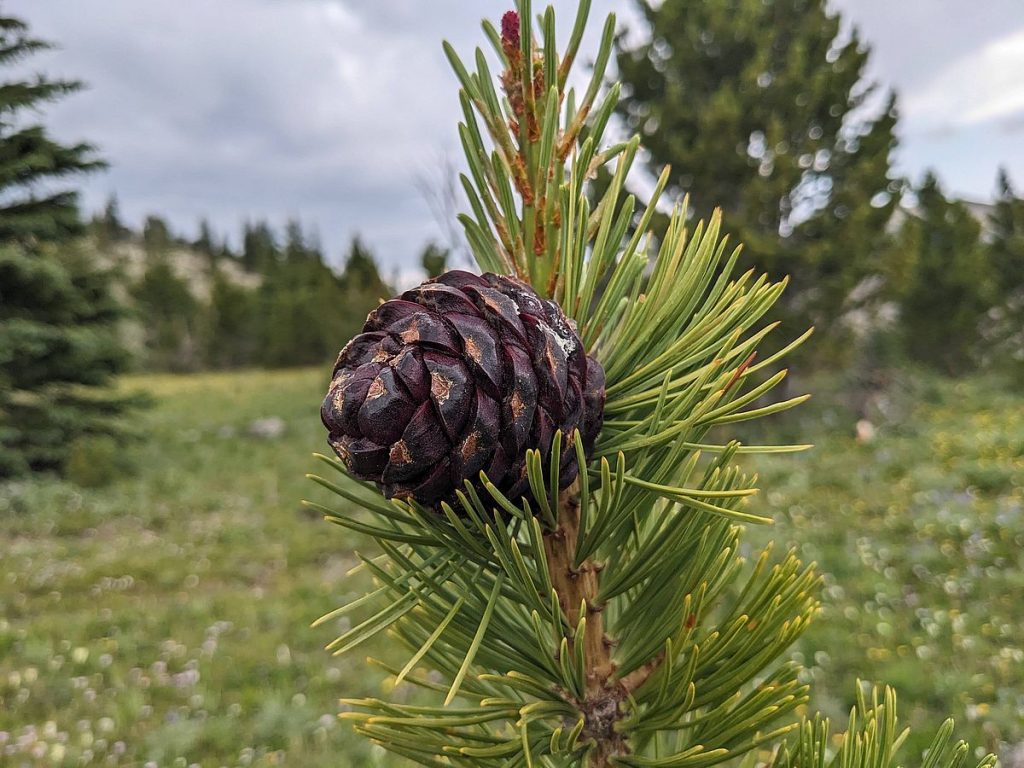
In that future, we would shift from taking life to giving life. We would bring back the eastern ash, the whitebark pine, and the disappearing black oaks; we would revive the plummeting insect populations and the North American songbirds, whose numbers have fallen by a third over the past fifty years. In the meantime, our most effective antidote to ecological anxiety is noticing, cherishing, and protecting the wildness that survives within our animate circles.
A flight of amazons
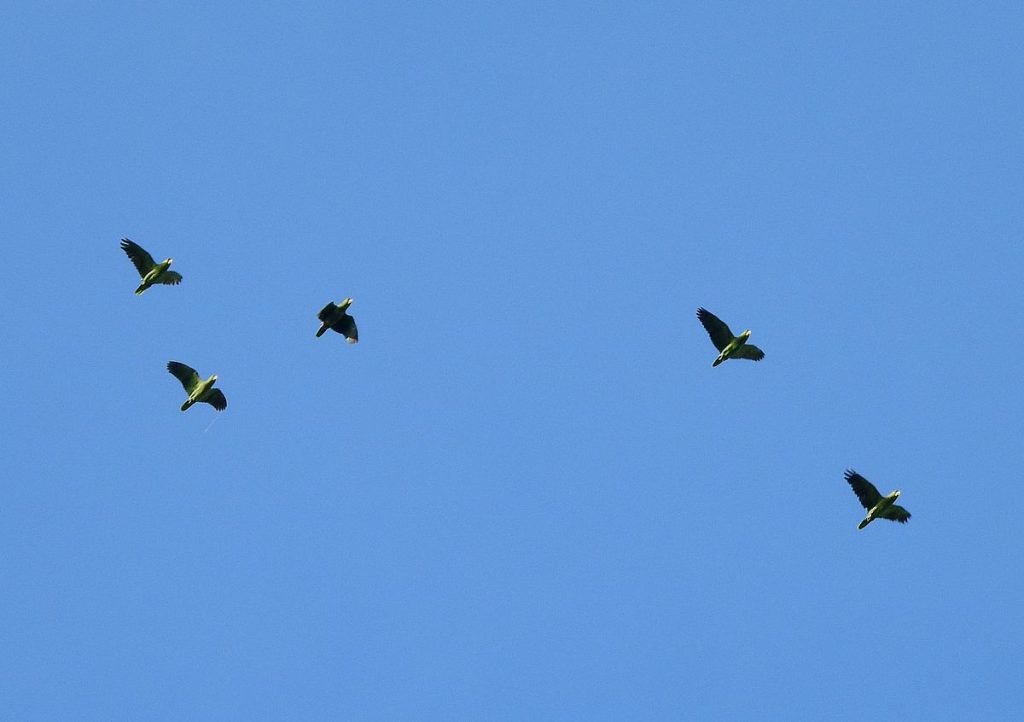
I can hear another flock of lilac-crowned amazons approaching. I scan the southern sky and spot them, an irregular line of broad-winged specks, necks thrust forward, wings beating hard. There are 17 in this group.
Below them, the landscape spreads out to the horizon: from the Pacific Ocean behind them, across the lush green coastal plain, to the blue foothills of the Sierra ahead. I don’t know where they’re going or what they see, how they’ll survive this year’s El Niño of drought and hurricanes. But I can imagine, and wonder. I can be inspired by Richard Louv to seek nature wherever I am, to cultivate my curiosity, to notice deeply and imagine otherworlds.
And from these moments of wonder, I create a map of stories spread out like the landscape below the lilac-crowned amazons: stories to remember and stories to share, stories to accompany me through life on this fragile, resilient planet. Great-tailed grackles hide their nests in the mangoes of our barrio. A mountain lion screams outside Richard Louv’s house in the mountains of southern California. And this morning in an hour and a half, 235 lilac-crowned amazons cross the Huatulco sky, bound for the mountains. Maybe someday I’ll learn where they’re going.
Further reading
Johnson, K. & Peer, B.D. (2022). Great-tailed grackle (Quiscalus mexicanus), version 2.0. In Birds of the World (P.G. Rodewald and B.K. Keeney, editors). Ithaca, NY, USA: Cornell Lab of Ornithology. https://birdsoftheworld.org/bow/species/grtgra/cur/introduction
Louv, R. (2026). Noticing: intimate encounters with the natural world. New York, NY, USA: Algonquin Books. https://www.hachettebookgroup.com/titles/richard-louv/noticing/9781643753034/
Renton, K. (2020). Lilac-crowned amazon (Amazona finschi), version 1.0. In Birds of the World (T.S. Schulenberg, editor). Ithaca, NY, USA: Cornell Lab of Ornithology. https://birdsoftheworld.org/bow/species/licpar/cur/introduction