

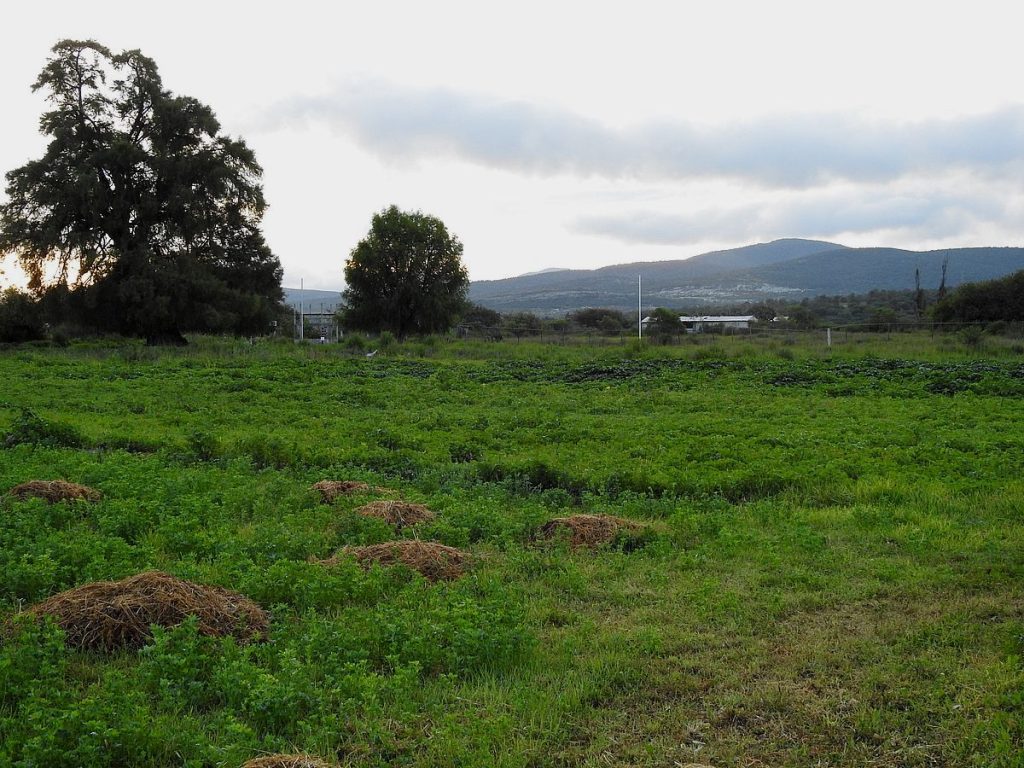
It’s a cool morning in mid-July in a valley of the Mixteca region of interior Oaxaca, Mexico. A meadowlark is singing from an alfalfa field near the ranch of our friends Rafa and Elizabeth. The meadowlarks in this region are a puzzle. They’re widely considered to be eastern meadowlarks (Sturnella magna), part of a vast breeding range that extends from New York and the Great Lakes region through Florida, Cuba, and eastern Mexico to Venezuela.
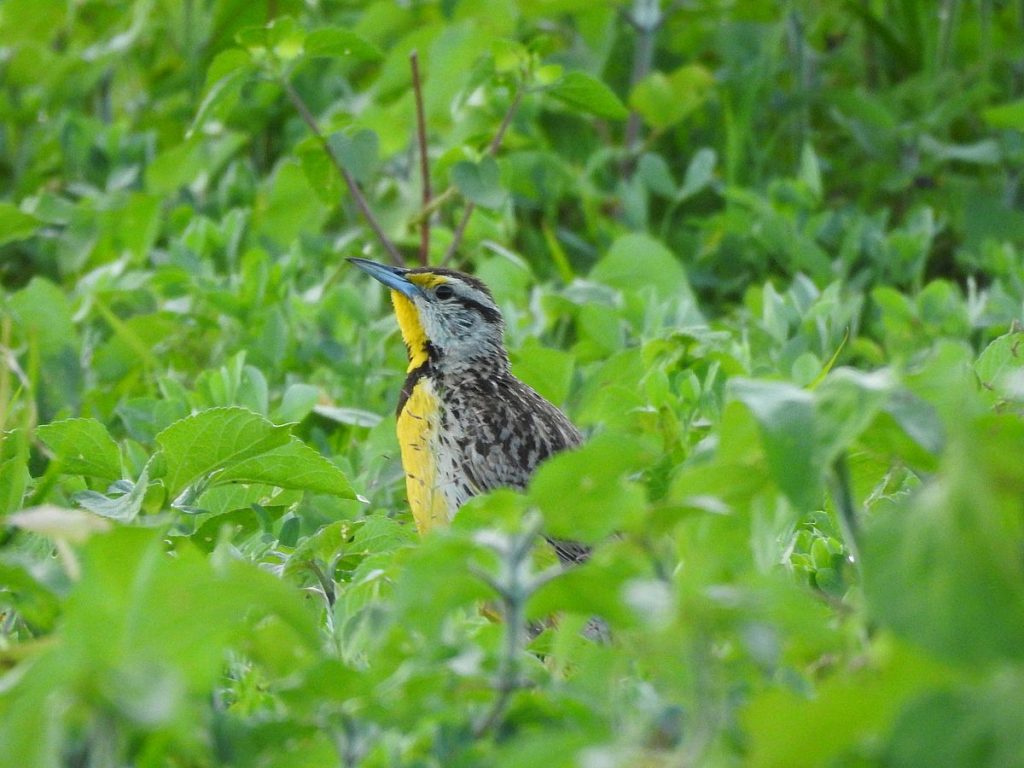
But these birds tend to be paler, with just a few speckles or streaks on their flanks and a song that tends to be a bit lower-pitched. All of this seems to suggest that they may actually be Chihuahuan meadowlarks (Sturnella lilianae), a species of the deserts of the southwestern United States and northern Mexico as well as irrigated fields in central Mexico. According to the range maps, Chihuahuan meadowlarks don’t make it to Oaxaca. But this species was only recognized as distinct a few years ago, in 2022, and research is lacking from the southern portion of its range. In Oaxaca, these maybe-Chihuahuan meadowlarks are an unresolved mystery. And that makes this morning’s singing extra-special.
Looking for the gaps
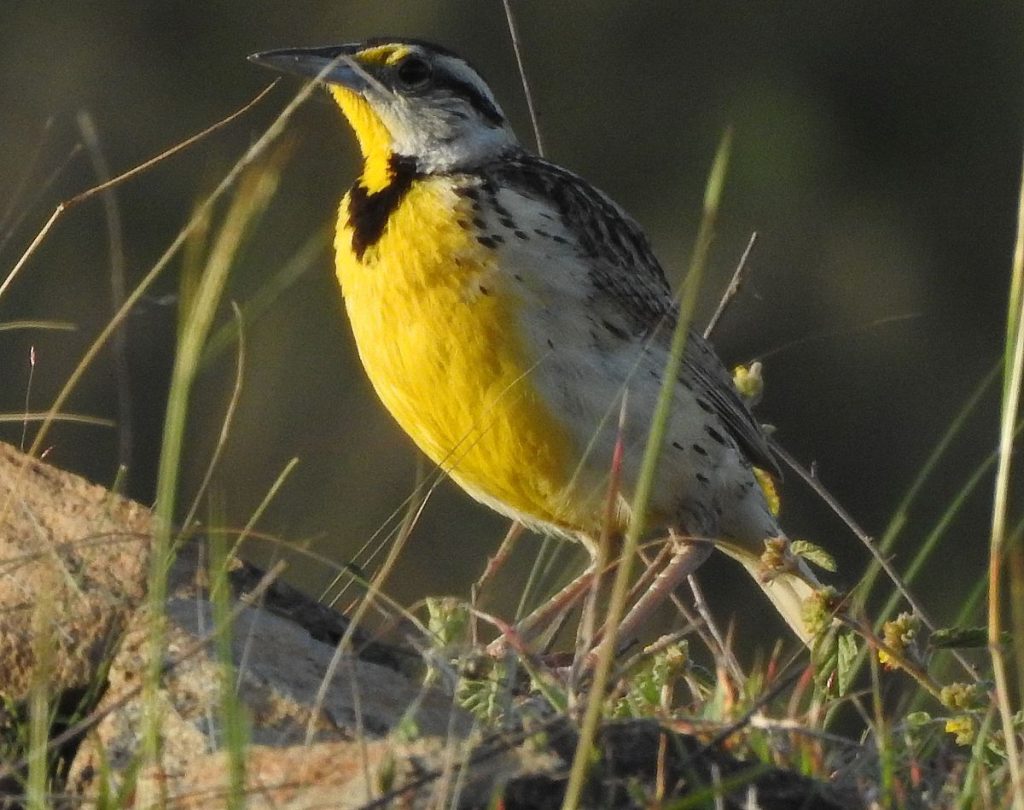
Whenever I get to spend time with meadowlarks in Oaxaca, I try to pay close attention. Photos, sound recordings, observations of their behavior—when so little is known, all of this information could be critical. Not that they’re always easy to observe. In agricultural habitats like this alfalfa field, Oaxaca’s meadowlarks seem to have a penchant for singing from the ground, hidden among the vegetation. It’s taken me 20 minutes of patient waiting to finally locate this one and get photos of it.
One of my favorite things about observing birds is that there’s always something new to learn. Like my friend and mentor Grant Hokit in Montana, I love to look for the gaps: the places, seasons, and species we don’t know much about. For birds, this valley is one of these places. Some of the species I have found to be common here were last recorded officially by an American ornithologist and collector named Chester Lamb in the 1940s. This month, I want to share some sketches: a few moments, sounds, and wonderings from this special valley.
Among the alfalfa fields
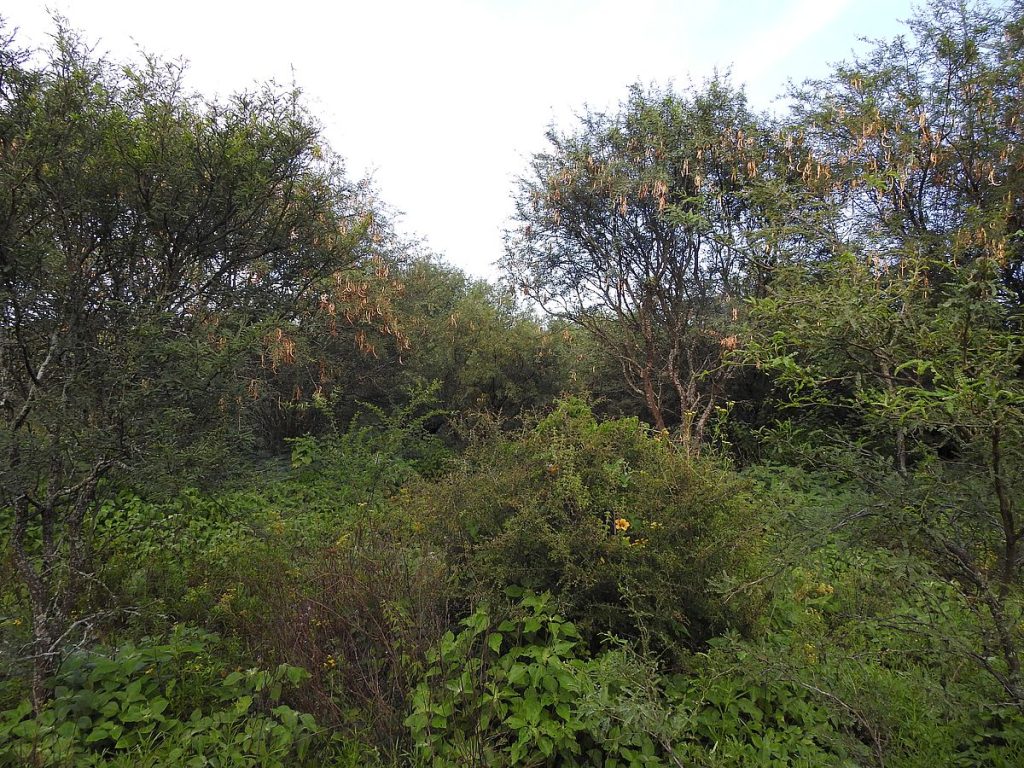
Beyond the alfalfa fields, a dwarf vireo (Vireo nelsoni) is singing from a mesquite woodland. This song is variable but quite distinctive, nasal and lively. This morning I never manage to see the singer, this tiny bird with a big voice.
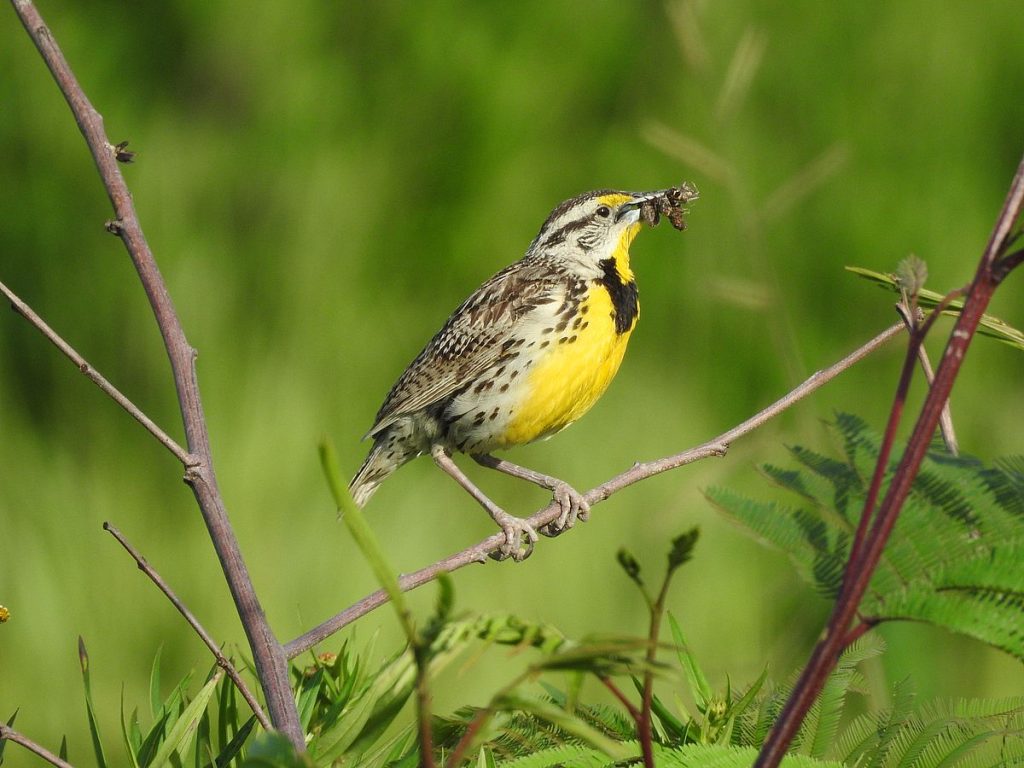
Another meadowlark is calling from a tangle of shrubs and flowers among small fields of corn and alfalfa. Its beak is jammed full of insects: there must be a nest hidden nearby, hungry babies waiting for their meal. To see this meadowlark carrying food is noteworthy enough, but what really gets me curious is the plumage. This bird has longer, ink-black streaks on its flanks, and the streaks extend forwards into the yellow wash across its breast. This one looks much more like an eastern meadowlark. I take photos and back off quickly, giving it space to tend to its nestlings.
I walk past fields where the cinnamon-rumped seedeaters (Sporophila torqueola) are singing energetically. The valley is crisscrossed with narrow dirt roads to access the fields. Making a few turns, I loop back around and follow another road into the far edge of the mesquite woodland.
Birds in the mesquite
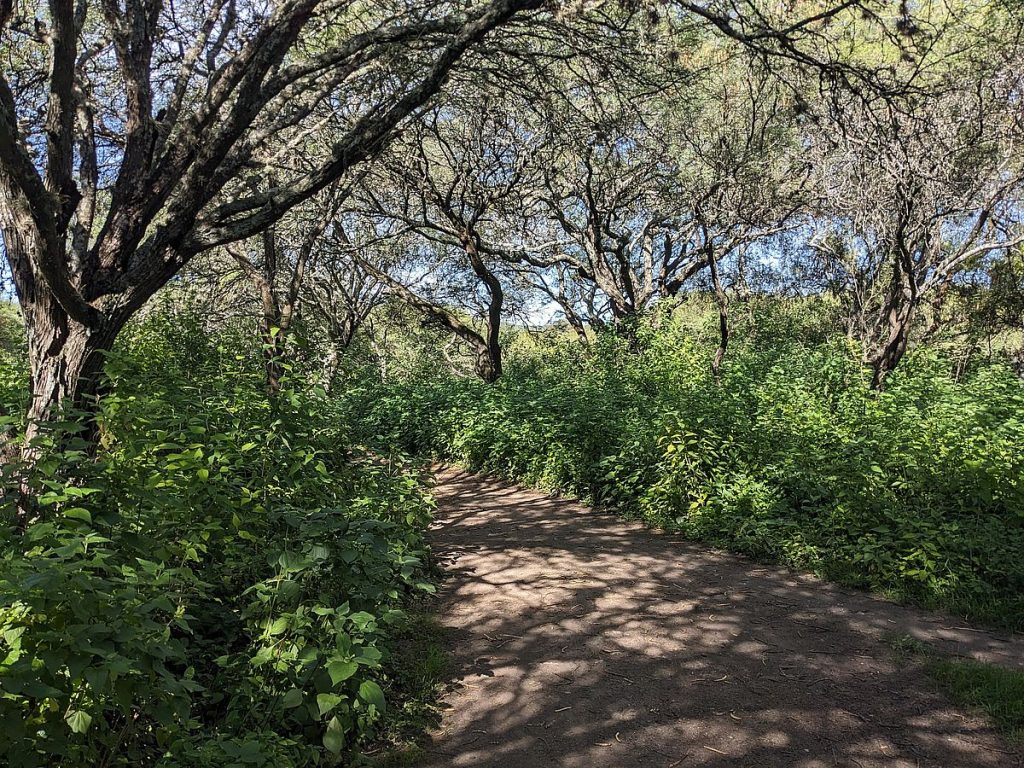
The dwarf vireo has fallen silent now, but a mourning dove (Zenaida macroura) is singing, that mournful cooing I know so well from the Montana summer. A common raven (Corvus corax) croaks hoarsely in the distance. It’s always interesting to hear familiar birds in new contexts, to check the range maps and realize that the breeding populations of ravens and mourning doves stretch more or less unbroken from Montana to Oaxaca’s interior, spanning so many changes in vegetation, topography, context, even language. If I close my eyes and listen, I can almost imagine that I’m back in Montana.
But then the pileated flycatcher (Xenotriccus mexicanus) starts singing again, and Montana fades rapidly into the distance. This species is endemic to dry, scrubby vegetation in the interior of just a handful of states in southwestern Mexico. That expressive song is unmistakable.
Into the matorral
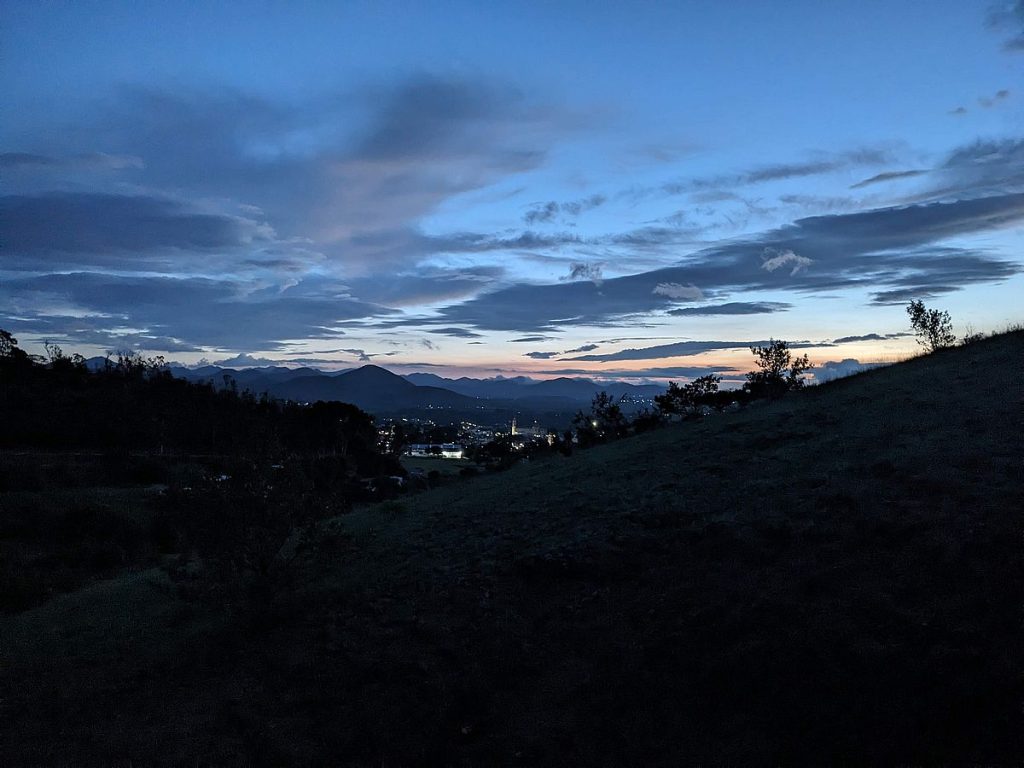
One morning I leave Rafa and Elizabeth’s house well before dawn, backpack full of water and snacks. I’ll be following a trail that climbs up above the pueblo, passing from foothills of arid matorral into dwarf oak forest. I’ve spent days studying the birds I think I might find in these different habitats. Now, finally, I’ll get to observe what’s actually here.
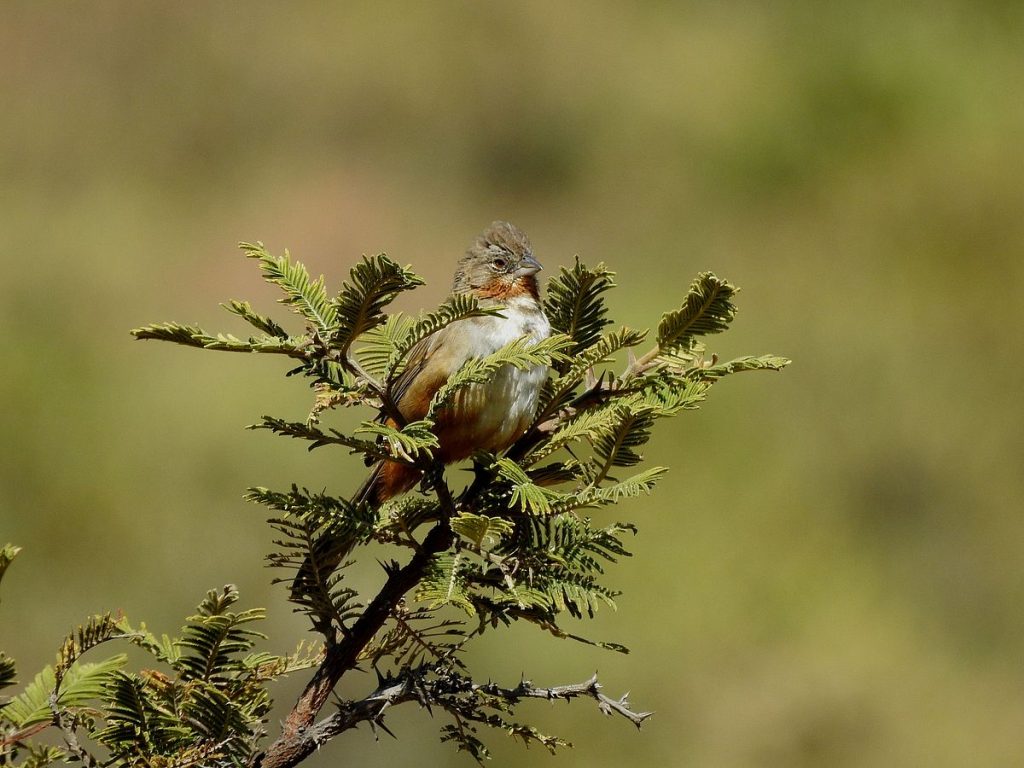
The pre-dawn matorral is an explosion of sound. The thin bouncing-ball whistles of the black-chinned sparrows (Spizella atrogularis) sound off from all sides. This is a desert species, here at the very southern extent of its range. From time to time, I can hear the “chewit” call of the endemic but very conspicuous white-throated towhee (Melozone albicollis). I’ve been keeping my eyes and ears open for its more widespread, northerly cousin, the subtle brown canyon towhee (Melozone fusca). In 1943, Chester Lamb documented both species in this valley, one of just a few spots where their ranges overlap. But as hard as I’ve looked, I have yet to find a canyon towhee here. In the distance, a white-winged dove (Zenaida asiatica) chimes in with its melodic cooing.
Blue mockingbirds and a Oaxaca sparrow
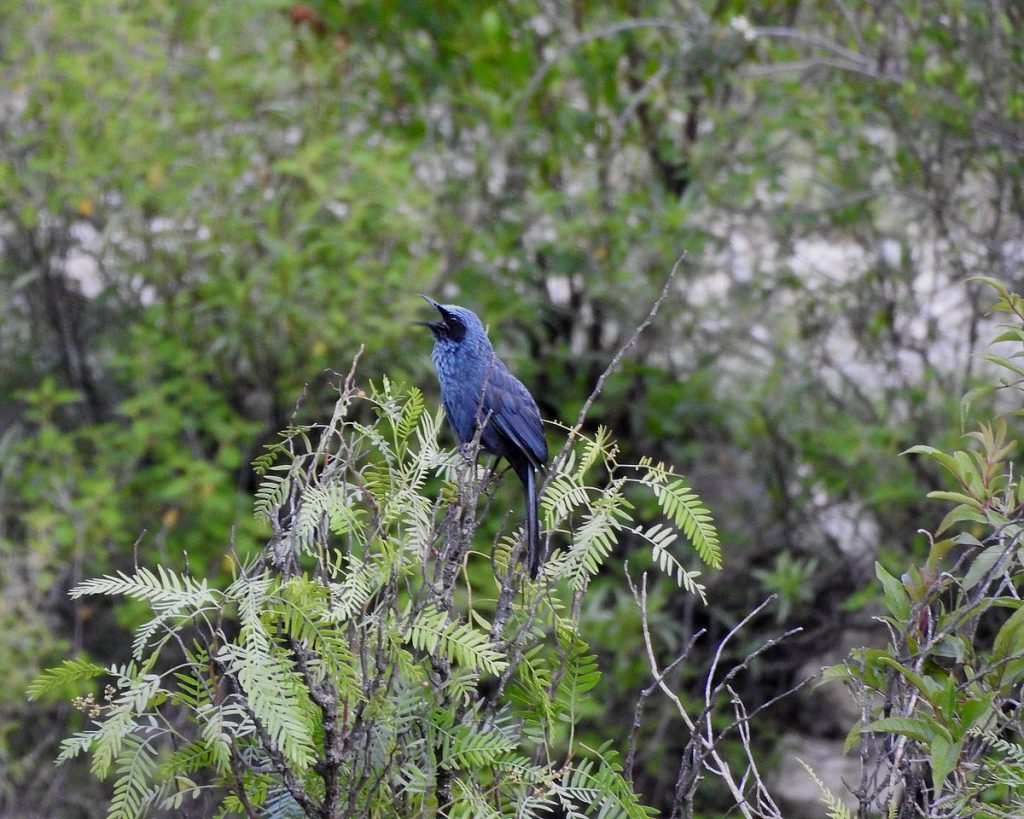
The sunrise paints the rocky hills in twelve shades of green. The trail parallels a small stream here, and the bushes grow taller. Bewick’s wrens (Thyomanes bewickii) and blue mockingbirds (Melanotis caerulescens) fill the airwaves with trills and improvisations.
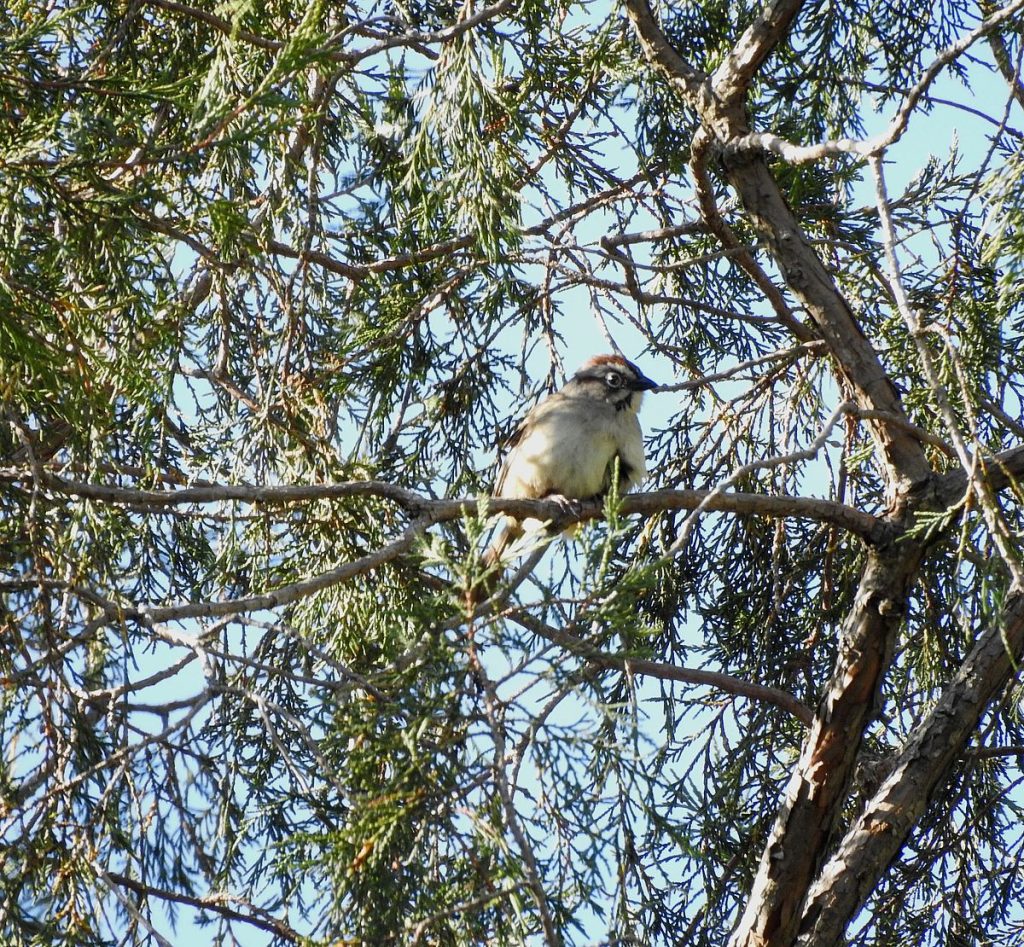
And what’s that in the distance? A sweet whistle followed by a two-part trill. In Montana I would be tempted to call it a green-tailed towhee (Pipilo chlorurus). But here, after a long, patient wait, I’m finally able to spot a plump sparrow with a chestnut cap and an intricate pattern of black and white facial markings. This is a Oaxaca sparrow (Aimophila notosticta), another endemic species. In fact, the distribution of the Oaxaca sparrow is almost entirely confined to the interior of Oaxaca, with a few records north into Puebla. And like the dwarf vireo, the Oaxaca sparrow hasn’t been reported here since Chester Lamb observed it in 1943.
The oak forest
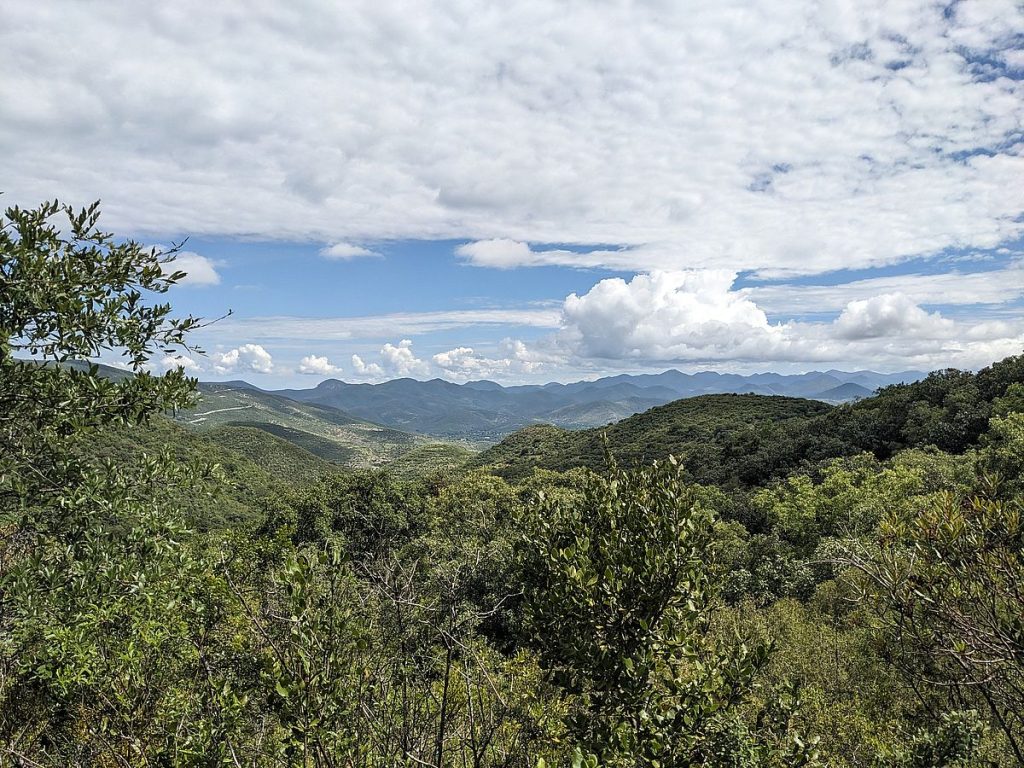
The shrieks of the Woodhouse’s scrub-jays (Aphelocoma woodhouseii) follow me through the matorral, past a few horses, farther up to where the matorral becomes dotted with oaks, and finally into solid oak forest. A black-headed grosbeak (Pheucticus melanocephalus) is singing from the slope above me. In the distance I can hear the simple trills of the spotted towhees (Pipilo maculatus).
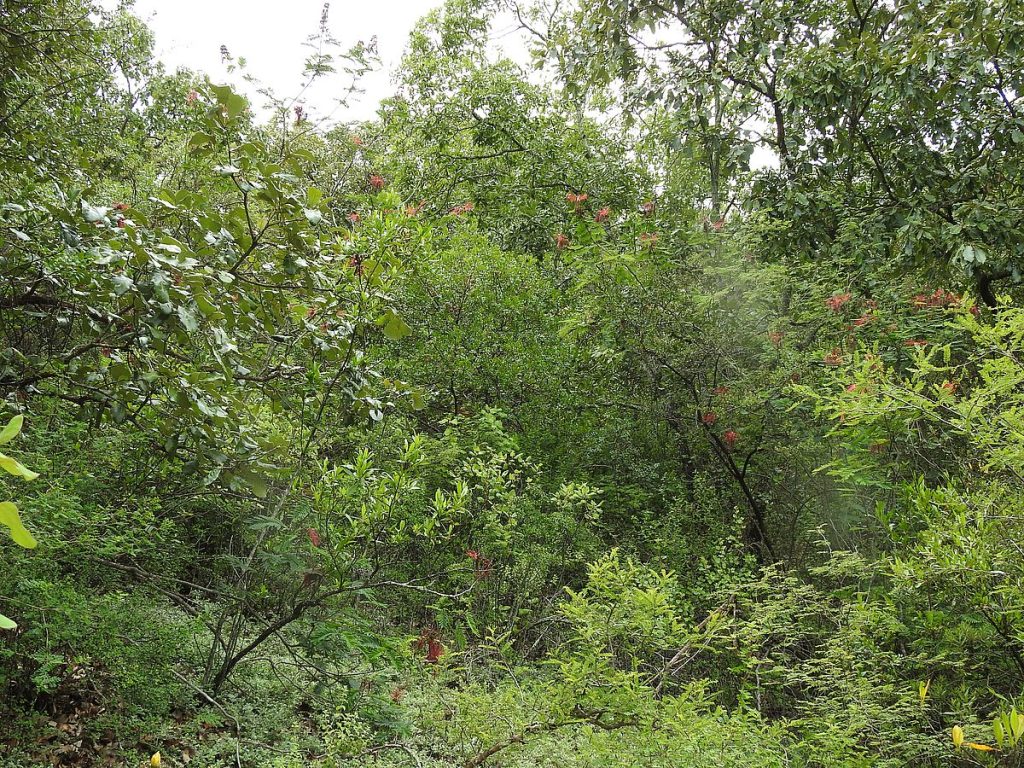
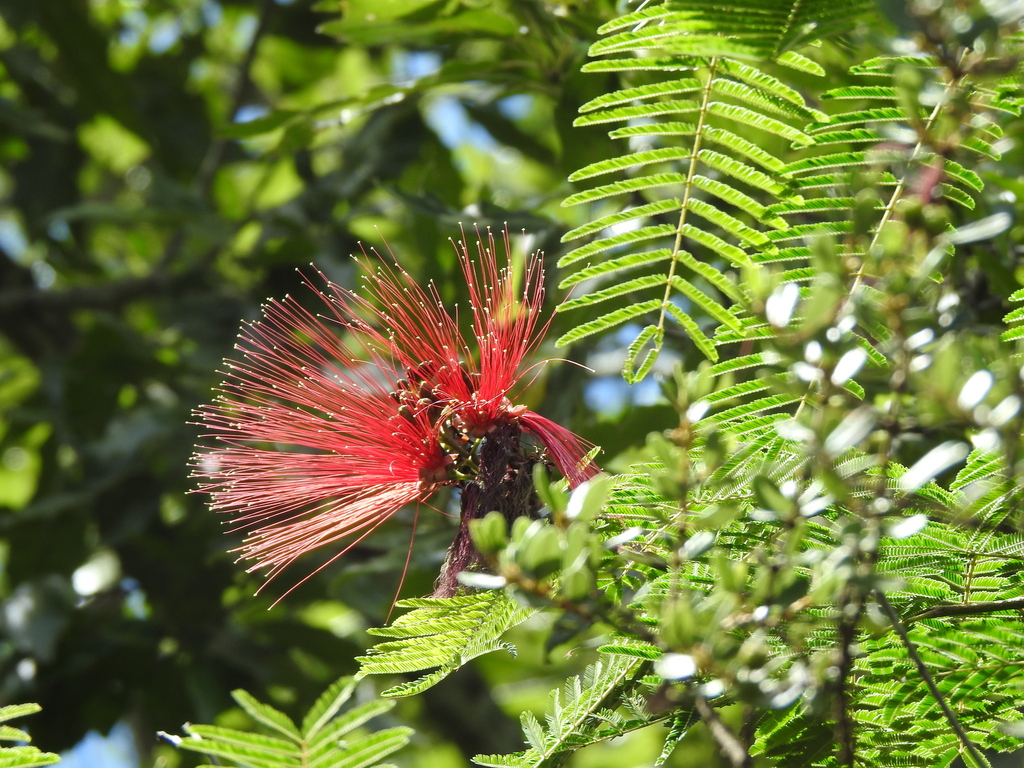
I stop in a small opening among the oaks where the forest understory is filled with the feathery red flowers of a legume I identify as a species of Calliandra. Something is giving a piercing song from the canopy. It’s a chestnut-sided shrike-vireo (Vireolanius melitophrys), a large and beautifully patterned vireo with an amazing knack for being completely invisible among oak leaves. I spend a lot of time trying to see it before I finally give up. Even then, the shrike-vireo keeps singing insistently. It can’t be more than 10 yards away from me.
The hummingbirds
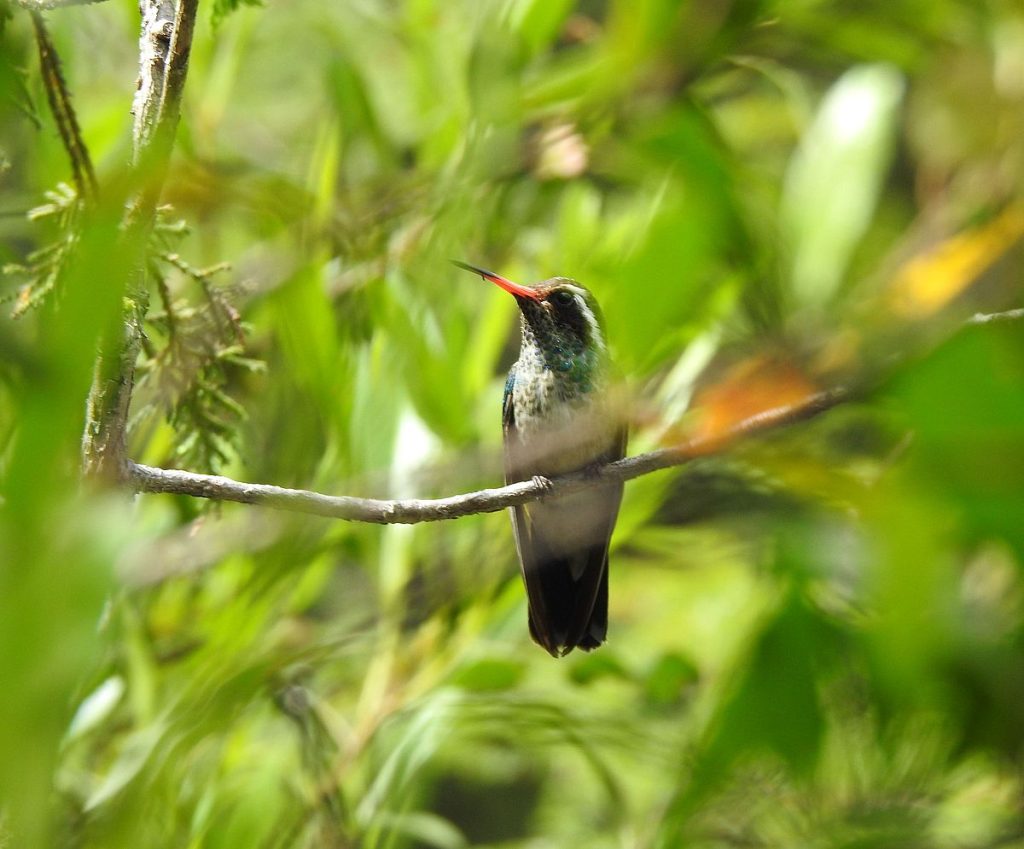
I turn my attention from the canopy to the Calliandra flowers, which I’m excited to notice are attracting hummingbirds. Most of my glimpses are frustrating. A hummingbird arrives for half a second and then zooms off again, an impossible blur in my binoculars. But eventually, I’m able to get enough glimpses to identify some of them—and the diversity is impressive. There are white-eared hummingbirds (Basilinna leucotis) with their striking white eyebrows. A huge Rivoli’s hummingbird (Eugenes fulgens) appears briefly, then retreats to the branch of an oak. Soon a Mexican violetear (Colibri thalassinus) arrives and chases everyone away, chattering emphatically. A violet-crowned hummingbird (Ramosomyia violiceps) perches under the canopy of an oak, giving a weird gurgling song.
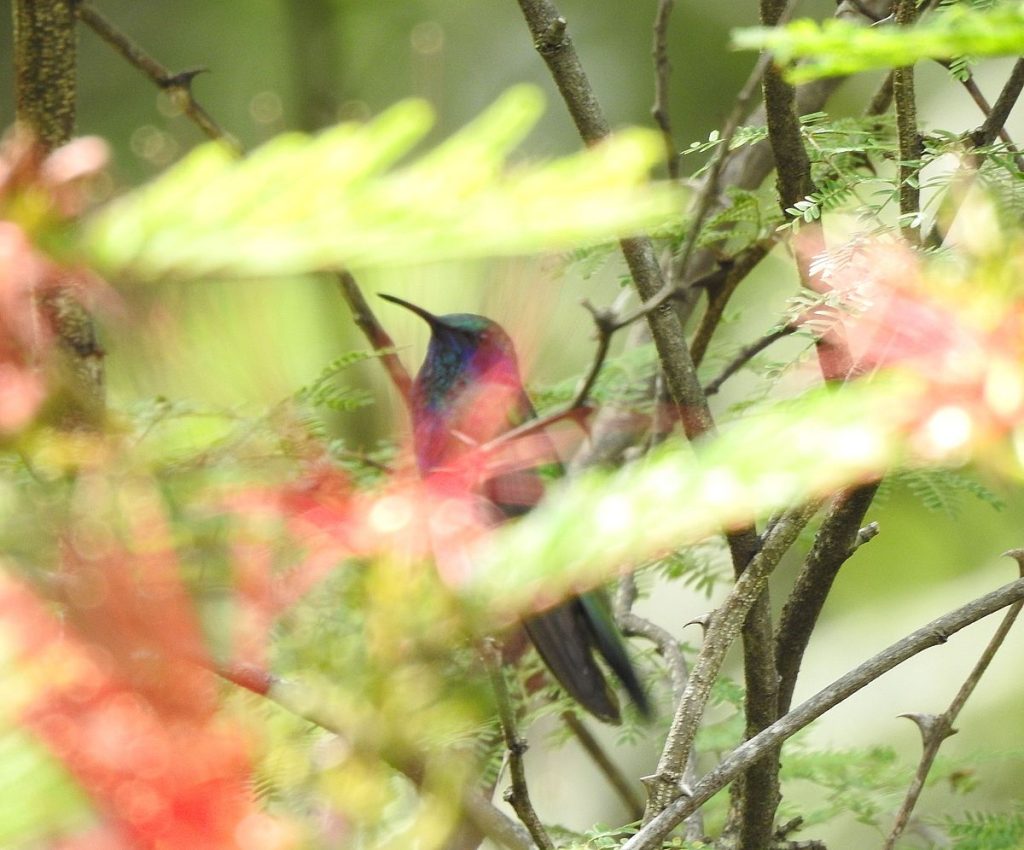
From time to time I keep hearing something I don’t recognize, a soft, high-pitched song that rises and falls. I search and search, suspecting another hummingbird, but the singer is as elusive as the chestnut-sided shrike-vireo. Finally I listen to the songs of all of the hummingbirds that might be here, my phone glued to my ear and volume all the way down so that I don’t disturb the birds around me. I find one and only one song that matches: the bumblebee hummingbird (Selasphorus heloisa), a tiny species of Mexico’s mountains.
Alive with stories
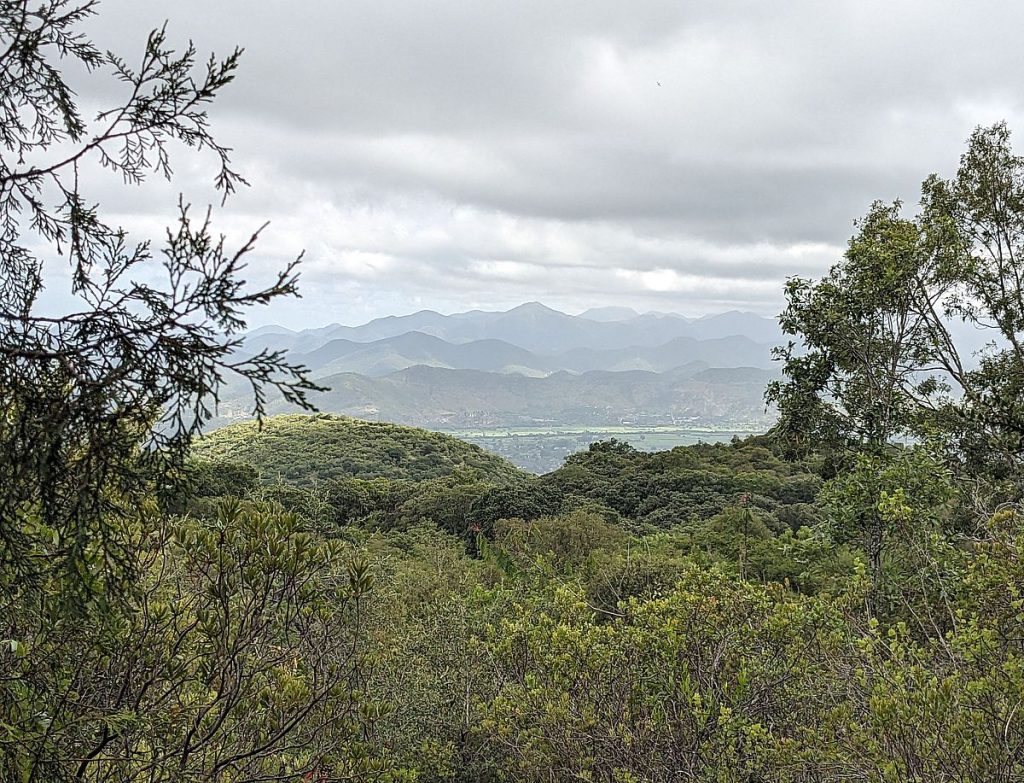
The mid-morning sun is getting hot: it’s time to head back. The forest has grown quiet now. Only the chestnut-sided shrike-vireo keeps complaining overhead. But now, as I look across the green valley below me, it’s full of stories. There in the distance are the alfalfa fields where the cinnamon-rumped seedeaters and the mysterious meadowlarks sing. There’s the matorral at the foot of the mountain where the black-chinned sparrows fill the pre-dawn air, the burbling stream where the blue mockingbirds and Bewick’s wrens hide in the thickets. And here in the oaks, the silky red Calliandra flowers where the hummingbirds gather.
There’s still so much to learn. What new stories will tomorrow bring?
Further reading
Beam, J.K., Jaster, L.A., Jensen, W.E., & Lanyon, W.E. (2022). Chihuahuan meadowlark (Sturnella lilianae), version 1.0. In Birds of the World (N.D. Slye, ed.). Ithaca, NY, USA: Cornell Lab of Ornithology. https://doi.org/10.2173/bow.lilmea2.01
Davis, J. (1974). Obituary. Auk 91(2):479-480. https://digitalcommons.usf.edu/cgi/viewcontent.cgi?article=19584&context=auk
Moore Laboratory of Zoology. (n.d.) Mexican Bird Resurvey Project. https://moorelab.oxy.edu/research/mexican-bird-resurvey-project