

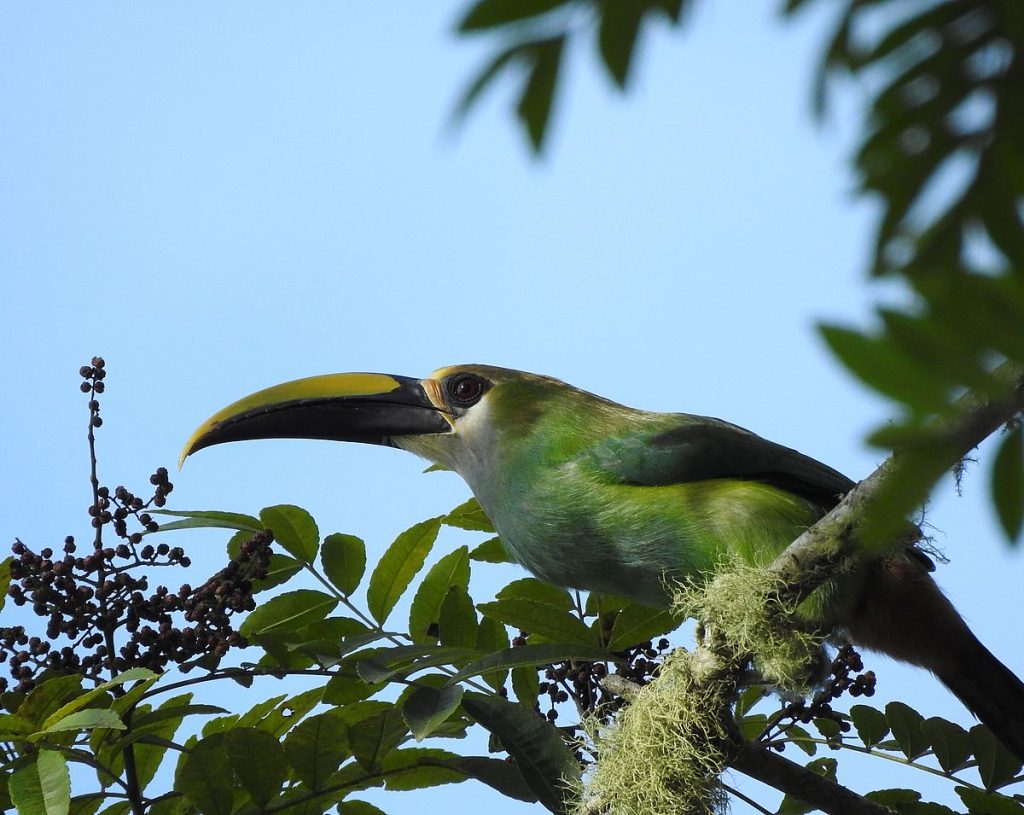
It’s December on a forested slope near the coffee-producing community of Pluma Hidalgo in the Sierra Sur of Oaxaca, Mexico. A small flock of northern emerald-toucanets (Aulacorhynchus prasinus) gives their gentle grunts near a tree with small reddish fruits where they’ve been feeding. Emerald-toucanets are gorgeous but amazingly well-camouflaged. Their brilliant green feathers, the rusty patch under their tail, even their yellow-and-black bill—all of it just disappears among the trees. Getting a good look at a northern emerald-toucanet is a rare, special experience. Getting to watch them eat fruits, together with western tanagers (Piranga ludoviciana) and rose-breasted grosbeaks (Pheucticus ludovicianus), is even more special.
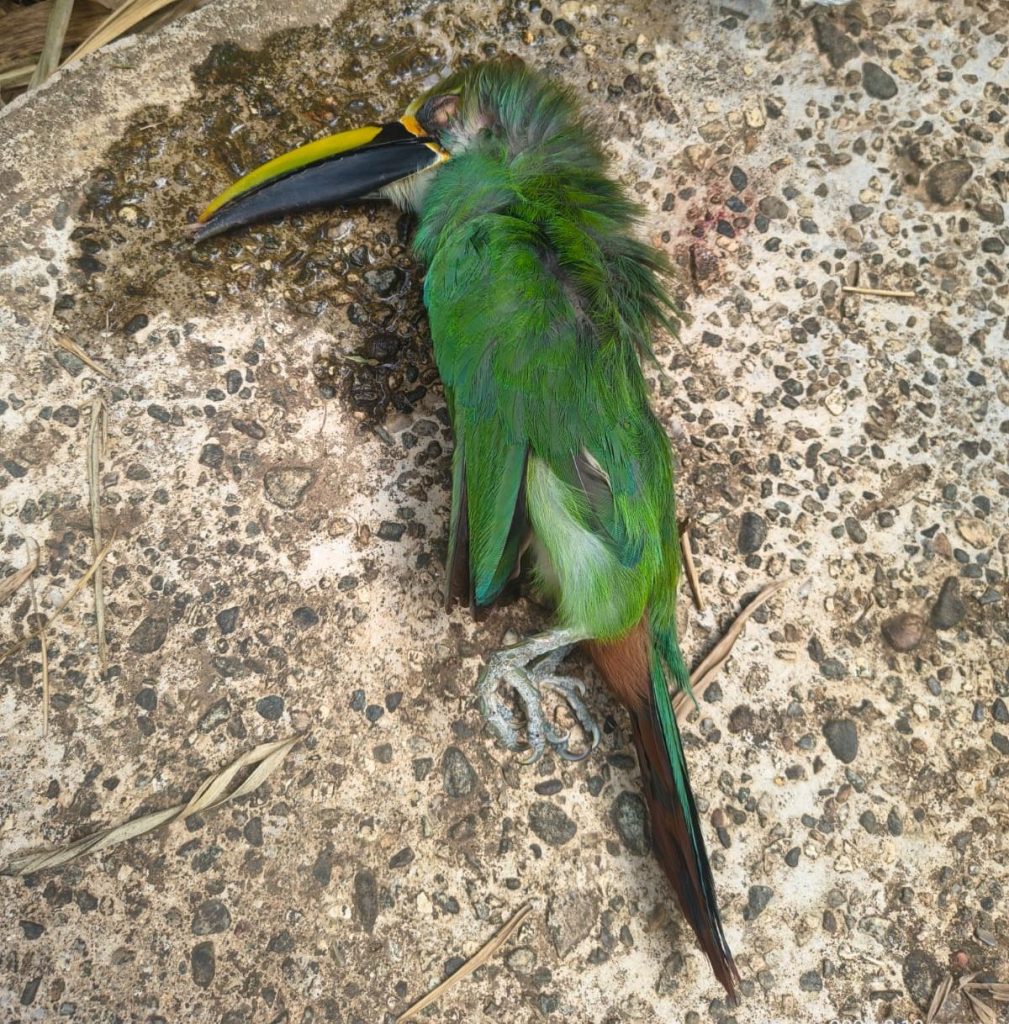
But when we stop to visit a friend in Pluma Hidalgo in March and he shows us a northern emerald-toucanet, it is bad news of the worst kind. The toucanet is recently dead, its multi-hued feathers soft and motionless. There is no sign of poor health. We don’t know what has killed it, why it has turned up dead at his house. But my prime suspect is a window reflection. This is an international issue, wherever birds and windows are found, and this month it’s time to talk about it. I first learned about this problem while living in Montana, USA. But wherever windows kill birds, the solutions are the same. Most importantly, this is something we can easily solve—and that will make a big difference for the birds. Let’s jump in.
Collision course
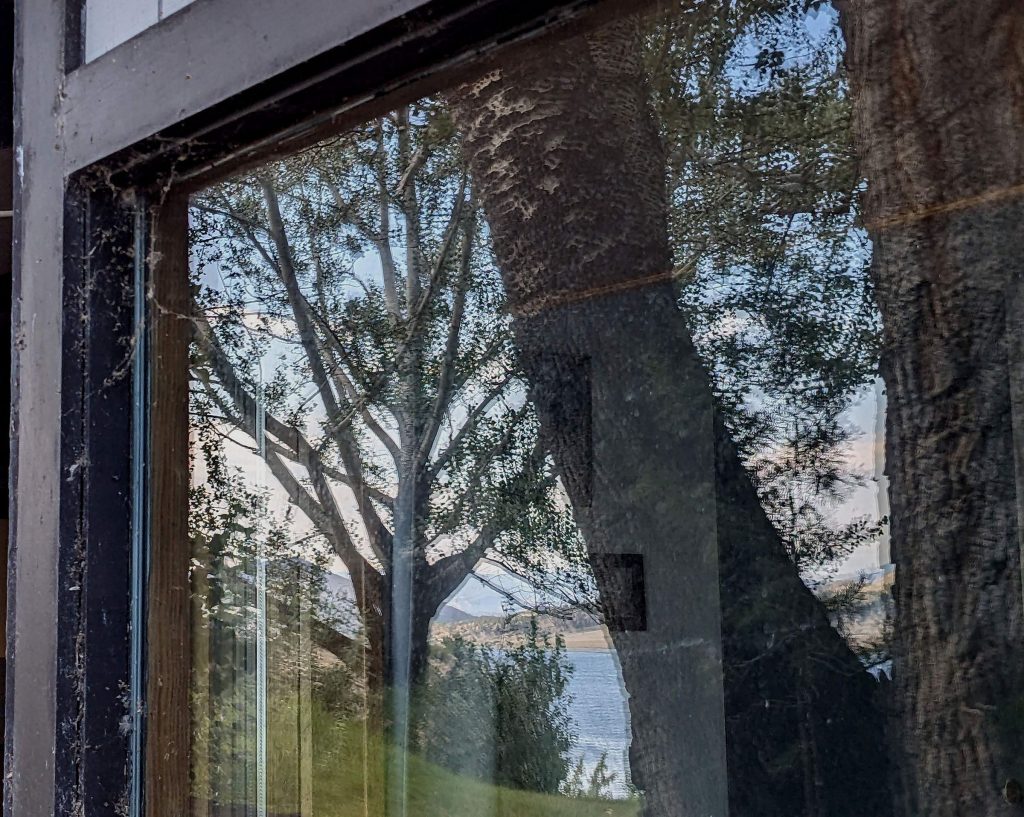
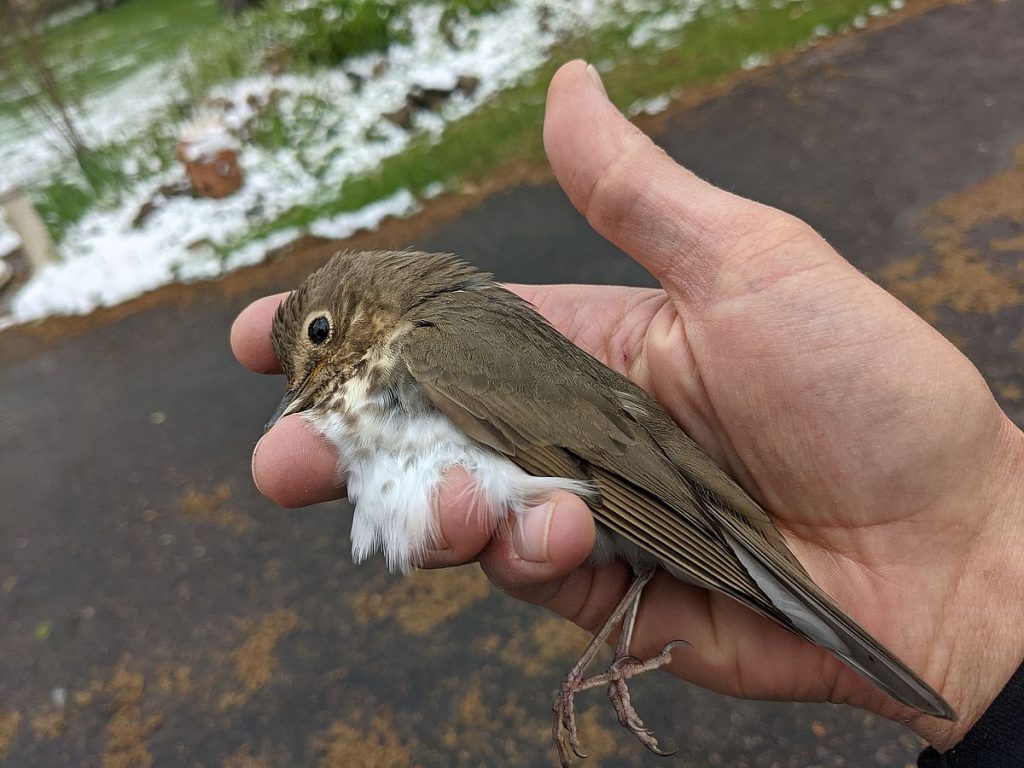
Helena, Montana, USA, May spring migration. The forceful thud of a bird hitting glass slams me out of my morning routine. Not again, I think. I run outside, hoping I’ve imagined it.
The veery (Catharus fuscescens) lies crumpled on the sidewalk in a soft brown heap. Its black eyes still glisten with life as I gently pick it up and cradle it in my hands. But the bird is listless, stunned and perhaps concussed, its toes barely grasping as I set it down gently away from the window.
Twenty minutes later, the veery is gone. Perhaps the window simply stunned it and the bird flew off. But I know from a biologist friend of mine, Hilary Turner, that far more birds die from window strikes than just the ones we see. Indeed, a study published in 2024 by Ar Kornreich and others analyzed wildlife rehabilitation records from more than 3,000 birds (of 152 different species) injured in building collisions. These are the birds that someone found alive after a collision. Birds which gave signs of hope: the lucky ones, it would seem, that survived the inicial impact. Someone took them to a wildlife rehabilitation center. They were given veterinary treatment. Even so, the study shows, more than half of them later died.
Disquieting numbers
Window strikes are a big problem. In the United States, studies rank them second only to domestic cats as the leading cause of bird deaths directly caused by humans. (Deaths caused indirectly by habitat loss are thought to be extremely important as well, but this source of mortality is very difficult to measure.) The numbers are eerie and beyond easy comprehension, and the estimates keep climbing. A 2014 analysis by Scott Loss and others gave a median estimate of 599 million dead birds per year from building collisions in the US. Almost half of these—roughly 263 million birds—are from houses between one and three stories tall. (Multi-story apartment buildings, offices, and skyscrapers caused the rest.) And for US houses to kill 263 million birds per year, all it takes is an average of 2.1 bird deaths per house per year.
One billion birds
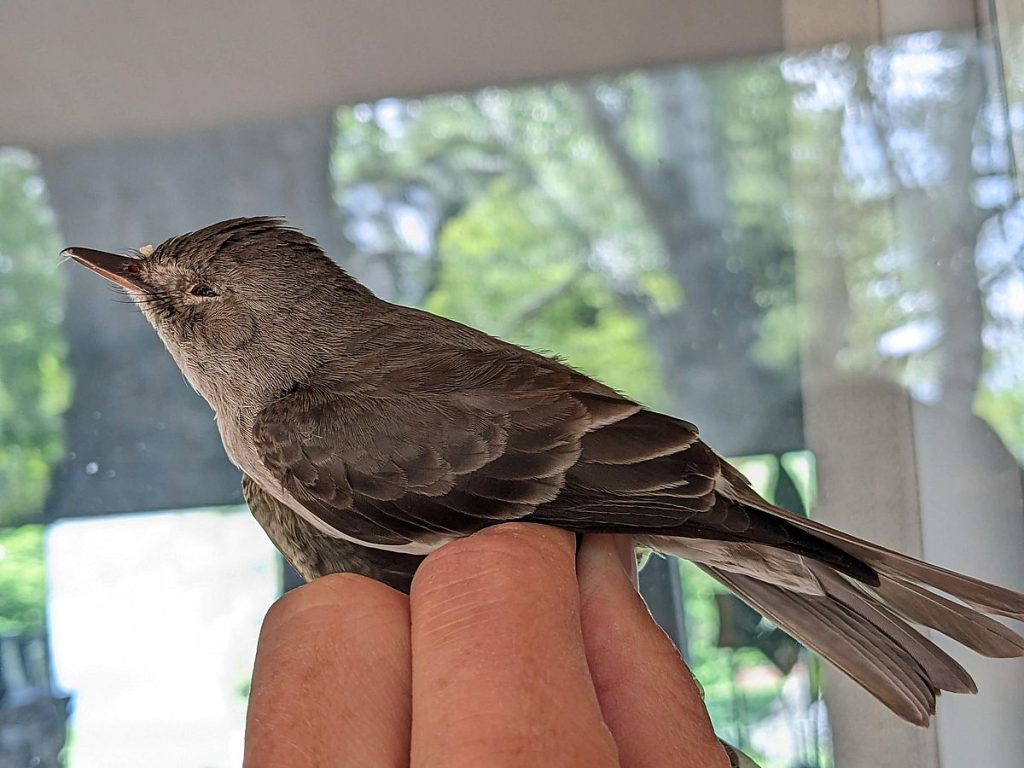
More recently, the 2024 rehabilitation study has pushed these estimates much higher. Previous studies had assumed that birds that flew off always survived. Now we know that’s simply not the case. Researchers now estimate that window strikes kill more than one billion birds per year—and that’s just in the United States.
A few dead birds around a house each year might go unnoticed, especially since predators and scavengers like cats and raccoons may remove carcasses before people find them. But for Helena, Montana birder Stephen Turner (Hilary’s father), the problem got so bad that it became impossible to ignore. In 2021, he moved into a new house a few miles south of Helena in a mature ponderosa pine forest. Its large windows reflected the surrounding woods, creating what he quickly learned was a death trap for local birds.
“We were going through three to five pine siskins a week,” he told me.
Montana window collisions and bird deaths
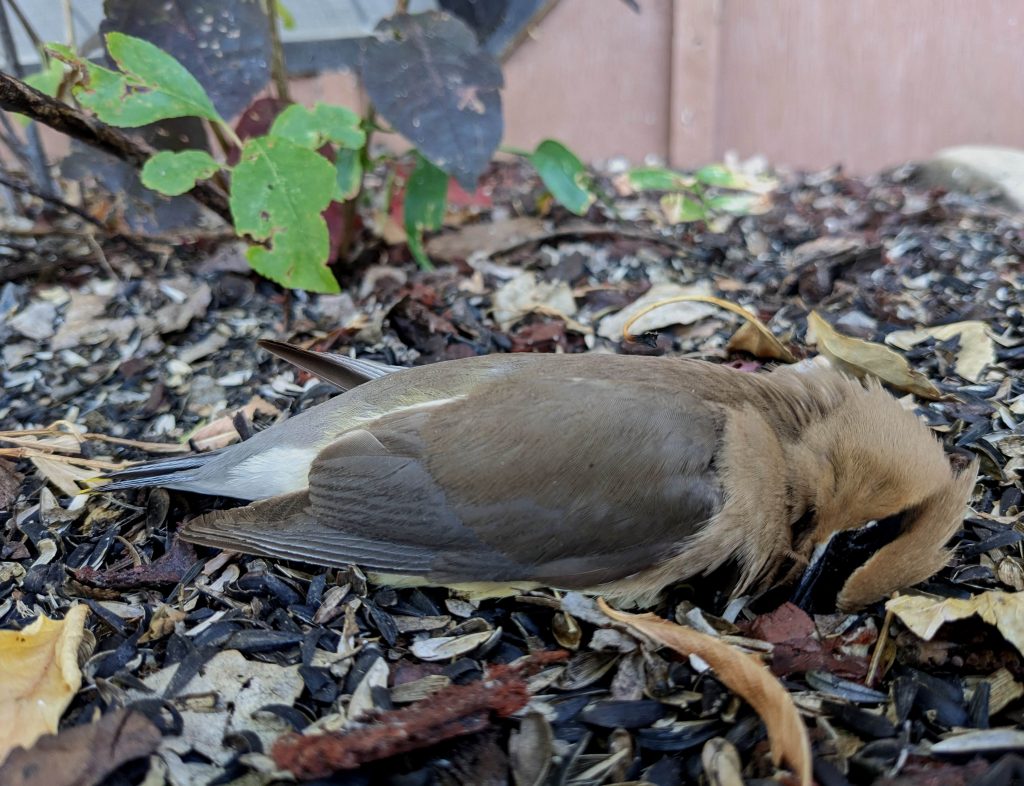
A few hours away near Bozeman, Montana, Lou Ann Harris of Sacajawea Audubon Society estimates that the windows of her home killed three to four birds during spring migration each year and a similar number in the fall before she began seeking solutions. “I’d get waxwings [Bombycilla spp.], and had a Swainson’s thrush kill itself,” she said. “I also had a redpoll [Acanthis flammea] in the wintertime.”
With more than 539,000 housing units in Montana, the state’s houses likely kill over 1.1 million birds each year—and that’s just based on the old 2.1 deaths-per-house calculation. At their houses, Stephen Turner and Lou Ann Harris have observed a much higher death toll. Even if their observations are outliers, when we add in the birds that fly off only to die later, we’re probably talking about several million deaths each year in the state of Montana alone.
What about Latin America?
What about Mexico and the rest of Latin America, with all of the spectacular bird diversity that resides here? I look around our barrio in Santa María Huatulco. Thanks in part to the warm climate, glass windows are much less common here than in the US. What windows there are tend to be small, often contained within the exterior wall of a home. Are window collisions less of a hazard here?
I ask some of my fellow bird observers here about their experiences. Edgar del Valle reports finding a wide range of window strike victims, from doves and robins to warblers and hummingbirds. David Ramírez points out that outdoor mirrors in restaurants and gardens can be death traps for birds, just like windows. Manuel Grosselet mentions a western tanager (Piranga ludoviciana) and a lesser goldfinch (Spinus psaltria), part of a long-term bird banding study in Oaxaca de Juárez. Most birds banded by scientists are never seen again. But both of these birds did reappear: both of them dead. Both of them killed by windows in the city.
Window collision studies in Mexico
Published studies of window collisions in Latin America remain few, far between, and local. In Mexico, we don’t have any overall estimate of how many birds might be dying each year from these crashes. However, the research that does exist documents that windows kill birds in a wide range of settings: on university campuses, outside government offices, near businesses and homes. They kill birds big and small, migratory species and year-round residents alike. Ruby-throated hummingbirds (Archilochus colubris). White-winged doves (Zenaida asiatica). Swainson’s thrushes (Catharus ustulatus) and clay-colored thrushes (Turdus grayi). Yellow-bellied sapsuckers (Sphyrapicus varius) and happy wrens (Pheugopedius felix). Blue buntings (Cyanocompsa parellina) and scrub euphonias (Euphonia affinis). Clay-colored sparrows (Spizella pallida) and indigo buntings (Passinera cyanea). Yellow-headed amazons (Amazona oratrix) and cedar waxwings (Bombycilla cedrorum).
I think about the rapid gentrification and tourist development that is happening in many areas, including Huatulco. Surely these changes must be making this problem worse?
The good news is that many of these deaths are preventable, wherever in the world they happen. As research sheds light on window collisions as a major problem for birds, concerned individuals and organizations are developing ways to make windows more bird-friendly.
Making windows bird-friendly
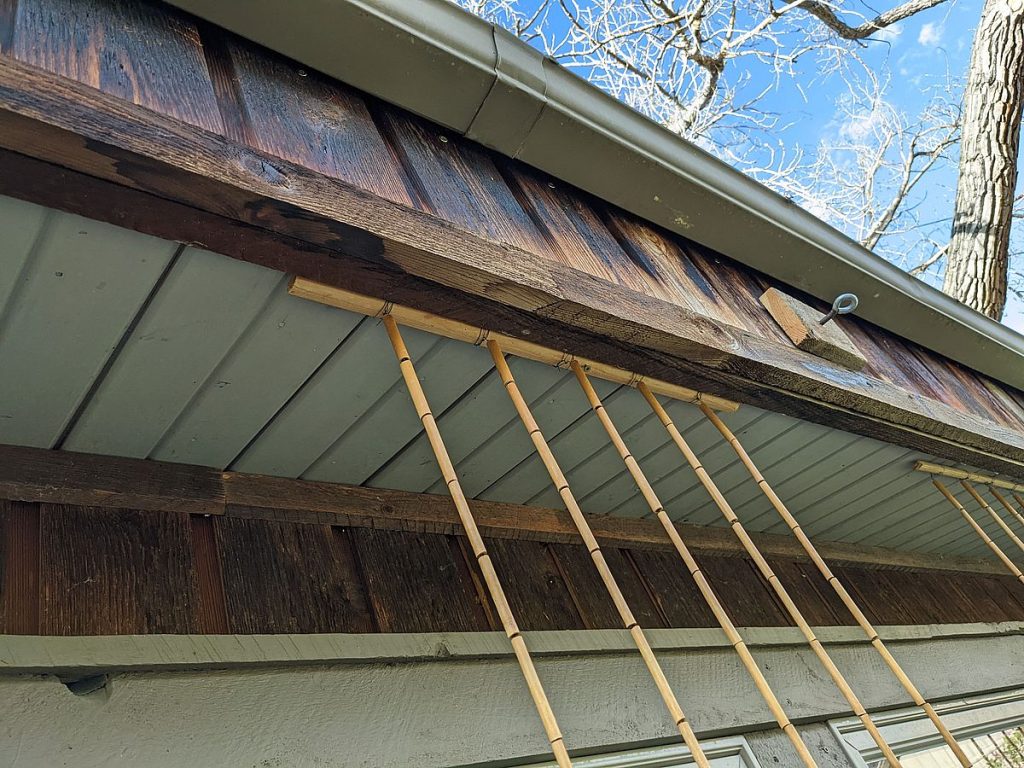
At his home near Helena, Montana, Stephen Turner has installed Acopian BirdSavers—a do-it-yourself solution that involves placing vertical rows of a thin rope known as parachute cord 4 inches apart across the outside of each window. Since installing it, Stephen has found evidence of just one window strike in the past two years—a tremendous decrease from his previous estimate of three to five birds per week.
In Bozeman, Lou Ann Harris has used a white paint pen to trace vertical stripes two inches apart on the outside of her windows, which has also proven effective.
A variety of options
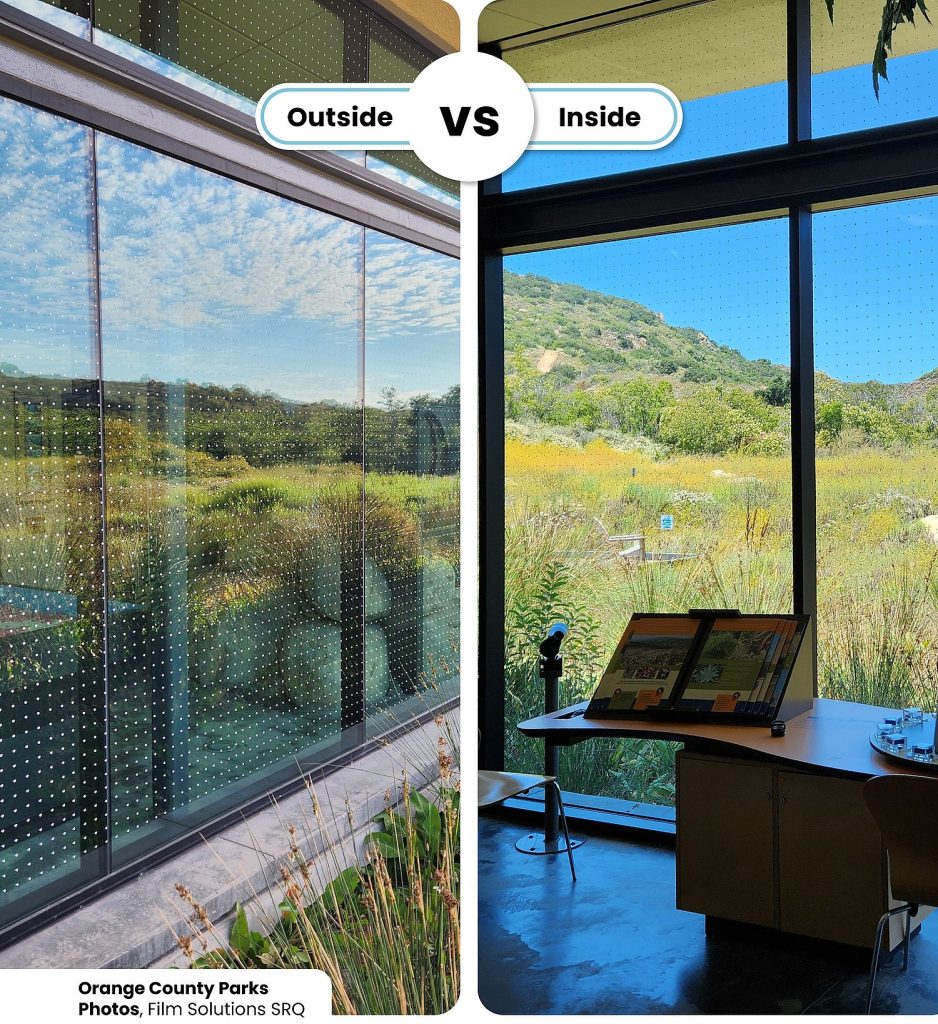
The American Bird Conservancy (ABC) has a list of reflection-reducing options on its website, including commercially sold sticker dots. With all of these methods, the basic goal is to break up the window’s reflection from the outside. In general, the ABC recommends using vertical stripes spaced a maximum of four inches apart or horizontal stripes spaced two inches apart. Note that putting a couple of decals of hawks or other predatory birds on your windows is not effective.
There are also a variety of commercial products designed specifically to prevent birds from crashing into windows. Feather Friendly and Solyx Bird Safety Film both use a system of prepared lines or dots, similar to the do-it-yourself options but applied as a tape or a film. CollidEscape is a window coating that appears opaque from the outside but lets light in and provides a relatively clear view out from the inside.
In Hermenegildo Galeana State Park in the state of Mexico, Mexico, Manuel Grosselet helped install Feather Friendly dots on the windows of the visitors’ center. He tells me that the center went from roughly one collision every day to zero in an entire year. From homemade hanging cords to commercially available solutions like Feather Friendly, from Montana to Mexico, making windows bird-friendly can be remarkably successful.
Ugly windows?
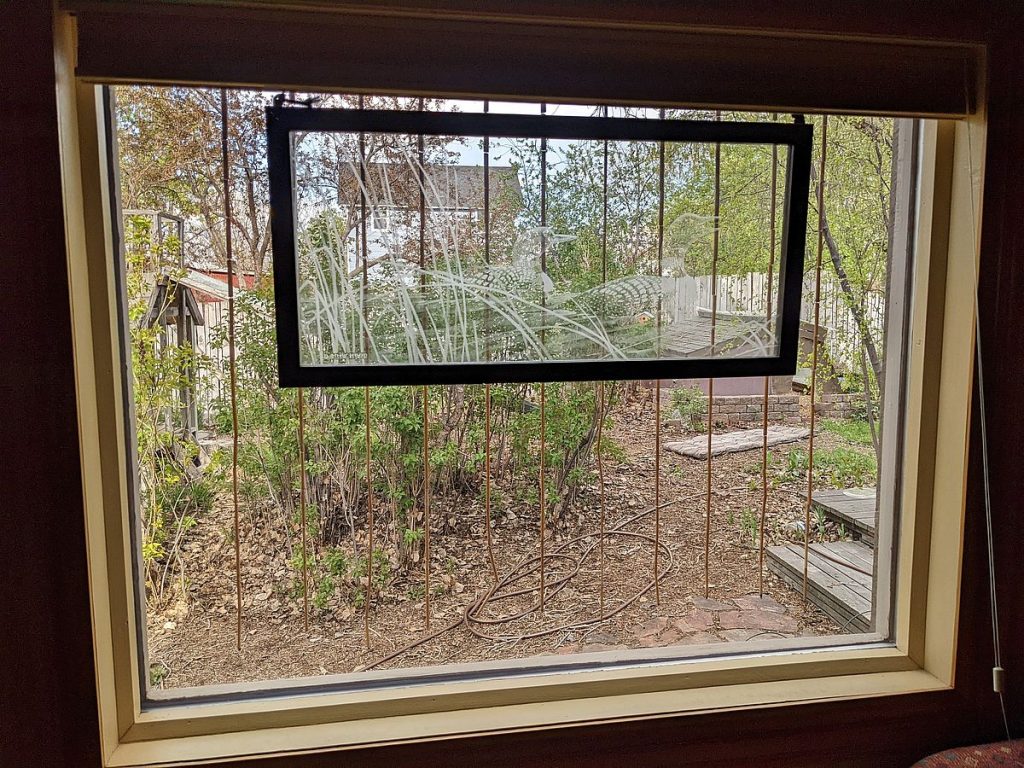
What about the aesthetics? Don’t the lines or dots make windows ugly? Opinions vary, of course, but the people I’ve spoken with who have installed these solutions say they still enjoy the view from their windows.
The Feather Friendly website shows several comparisons of views from inside versus outside after installing their system of dots. I’m impressed by how inconspicuous the dots are from inside, even though they’re plainly visible from outside.
Ruth Swenson has installed Acopian BirdSavers on her Helena home, repurposing beaded bamboo curtains for the job.
“Actually, I don’t even notice them—they sort of blend in,” she reports. “I’ve had several friends who, when they see them, have commented on how much they like them.”
The lives in our hands
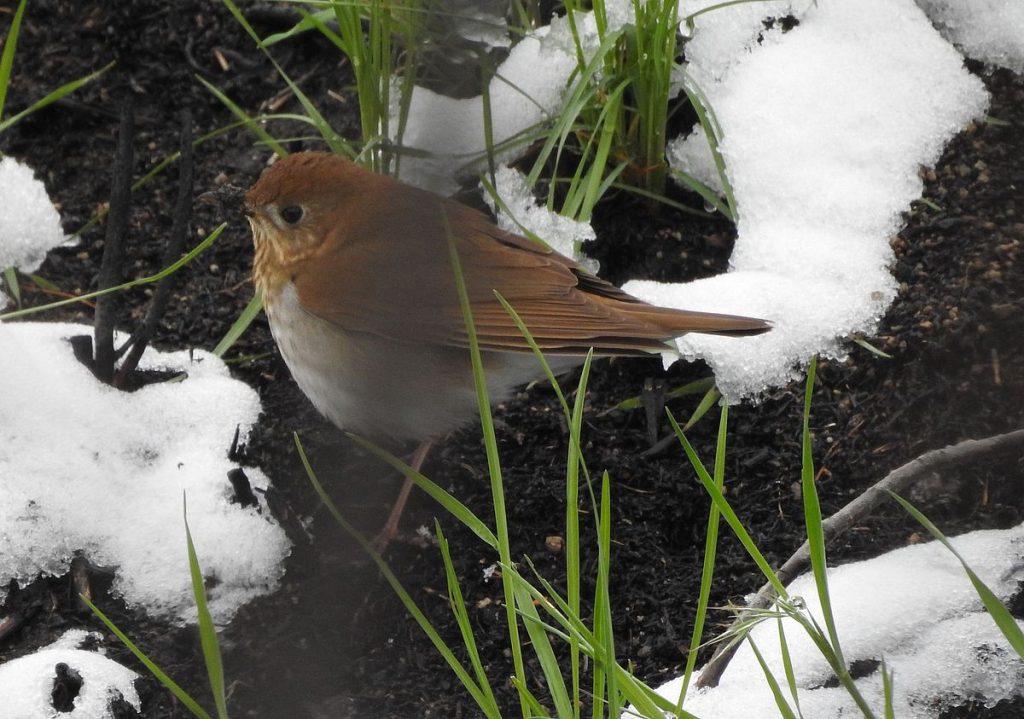
There’s a story behind every window strike victim. For the veery I held in my hands on that late spring morning, it was a story that involved the 5,800-mile migration it had just completed after wintering somewhere in the forests of Brazil. It had survived all the hazards of that migration, precarious thousands of miles on the wing. To arrive a healthy adult bird, ready to sing among the willows and bring forth the next generation, only to have it all cut short by a pane of glass—it was too much to bear. As I held that bird’s life in my hands that day, the choice seemed clear. It was time to solve the window problem.
Lou Ann Harris puts it this way: “You can do something about it, and it doesn’t cost much money. It just takes caring about these wild birds.”
For veeries and toucanets
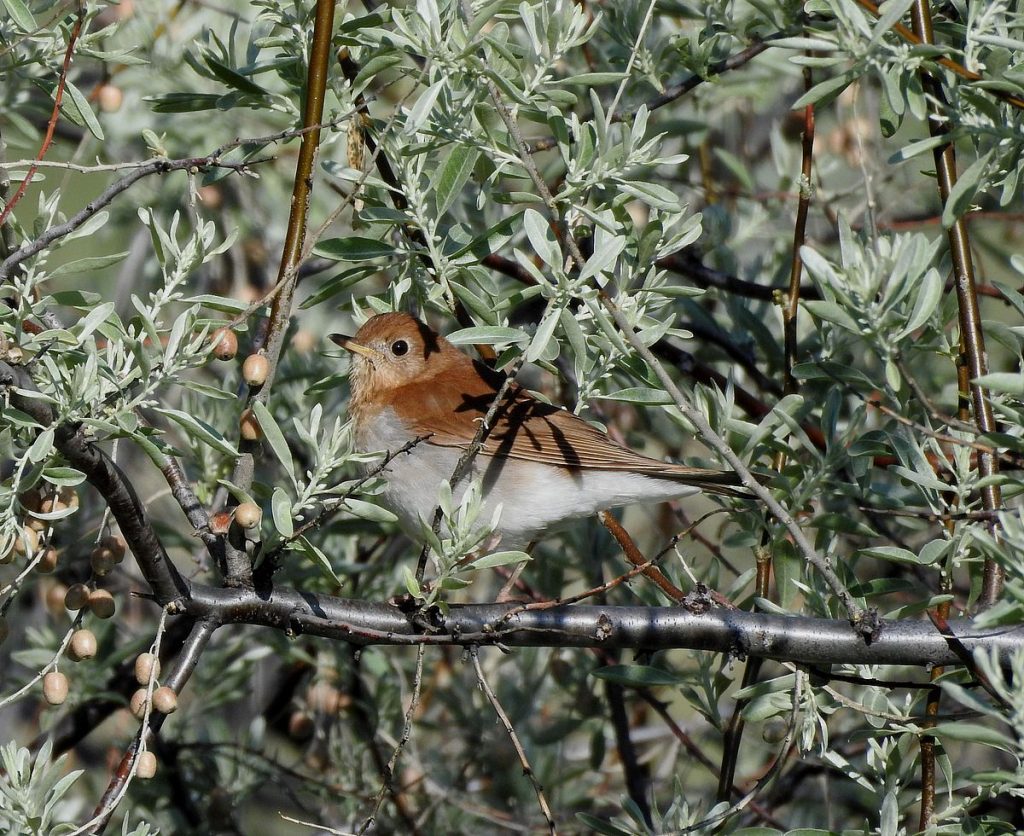
Across most of the northern hemisphere, it’s peak breeding season now for many birds. The ones that survived the windows, the outdoor cats, the constant losses of habitat, the crazy climate. They’re here, around us, searching for insects and fruits, raising young.
At the southern edge of Montana’s Glacier National Park, where Highway 2 climbs west towards the Continental Divide, a veery sings once from the aspens near a beaver pond. Traffic whines in the distance and the veery stops singing, switching back to its mournful calls.
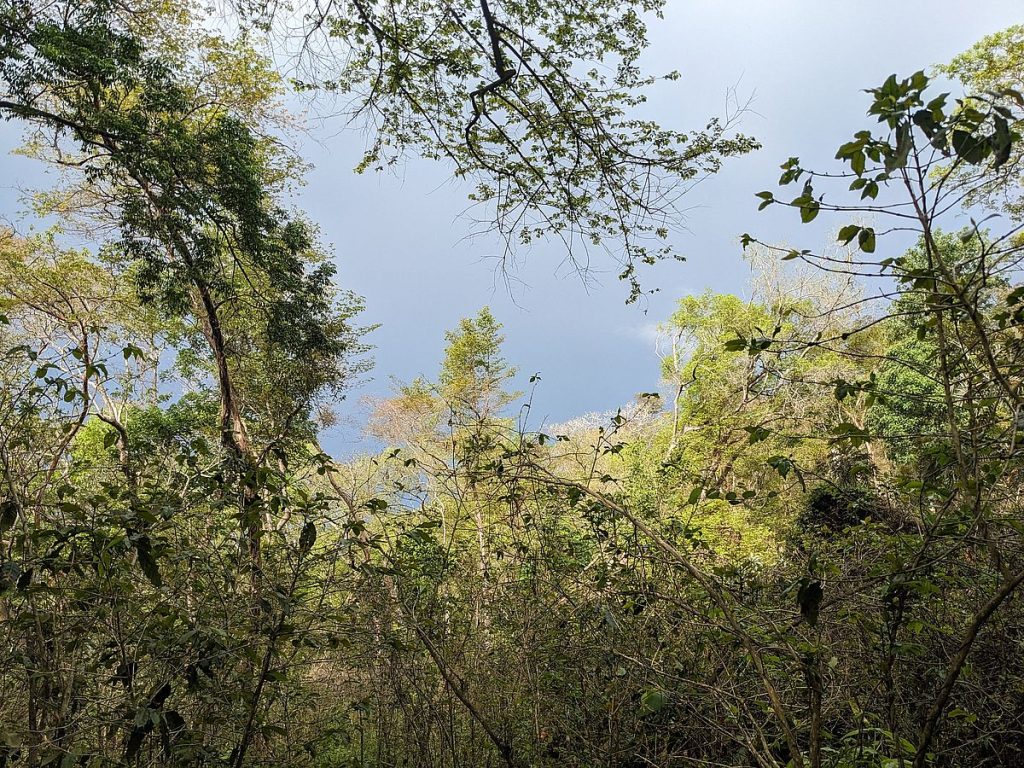
It rained lightly last night in the lush forest at the edge of Oaxaca’s Sierra Sur. The air is humid. A pair of northern emerald-toucanets is grunting in the distance. Towards the coast, the sky is the brooding purple-grey of an approaching summer storm. The toucanets stop calling. It’s starting to drizzle again, raindrops pattering gently down through the canopy, and a thicket tinamou (Crypturellus cinnamomeus) sings to the rain. In the distance, below, is Santa María Huatulco. The far-off roar of traffic bounces off of concrete and windows, rises up the slope.
The windows say nothing, but they’re waiting: a silent death trap for healthy birds, an untimely end to so many possible futures.
But it doesn’t have to be this way. We can cover the windows with Acopian BirdSavers, beaded bamboo hangings, polka dots, or white paint pen lines. With your help, and mine, maybe there will be veeries and northern emerald-toucanets again next year in these places, and the year after that.
A condensed version of this story in English first appeared in the July-August 2025 issue of Montana Outdoors. My Spanish translation appears here for the first time. Special thanks to all of the people who helped me with this story: Hilary Turner, Stephen Turner, Lou Ann Harris, Édgar del Valle, David Ramírez, Manuel Grosselet, Ruth Swenson, Jeff Acopian of Acopian BirdSavers, Paul Groleau and Ankur Khurana of Feather Friendly.
Further reading
American Bird Conservancy. (n.d.) Solutions for homes. https://abcbirds.org/strategies/solutions-for-homes/
Davidoff, J. (2024). Window strikes are even deadlier for birds than we thought. Audubon Magazine August 2024. https://www.audubon.org/magazine/window-strikes-are-even-deadlier-birds-we-thought
Gómez-Moreno, V. del C., González-Gaona, O.J., & Niño-Maldonado, S. (2019). Colisión de aves en México: la urbanización de un problema creciente y una barrera del vuelo. XXXII Congreso de la Asociación Latinoamericana de Sociología. https://cdsa.aacademica.org/000-030/1505.pdf
Gómez-Moreno, V. del C., González-Gaona, O.J., Niño-Maldonado, S., & Lucio-Martínez, M.E. (2023). Mortalidad de aves causadas por colisión en Ciudad Victoria, Tamaulipas, México. Huitzil 24(1): e-649. https://doi.org/10.28947/hrmo.2023.24.1.697
Klem, D., Jr. (2009). Avian mortality at windows: the second largest human source of bird mortality on earth. Proceedings of the Fourth International Partners in Flight Conference 244-251. https://birdsmack.wordpress.com/wp-content/uploads/2011/01/klem-2008.pdf
Kornreich, A., Partridge. D., Youngblood, M. & Parkins, K. (2024). Rehabilitation outcomes of bird-building collision victims in the Northeastern United States. PLoS ONE 19(8): e0306362. https://journals.plos.org/plosone/article?id=10.1371/journal.pone.0306362
Loss, S.R., Will, T., Loss, S.S. & Marra, P.P. (2014). Bird-building collisions in the United States: estimates of annual mortality and species vulnerability. Condor 116(1):8-23. https://academic.oup.com/condor/article/116/1/8/5153098
Loss, S.R., Will, T, & Marra, P.P. (2015). Direct mortality of birds from anthropogenic causes. Annual Review of Ecology, Evolution, and Systematics 46:99-120. https://www.annualreviews.org/content/journals/10.1146/annurev-ecolsys-112414-054133
Piratelli, A.J., Ribeiro, B.C., Dátillo, W., Vázquez, L.B., Ferreira de Almeida Magalhães, A., Gomes Cavalcante, E.M., … & MacGregor-Fors, I. (2025). Bird-window collisions: a comprehensive dataset for the Neotropical region. Ecology 106(6):e70126. https://doi.org/10.1002/ecy.70126
United States Fish and Wildlife Service. (n.d.) Threats to birds. https://www.fws.gov/library/collections/threats-birds
Uribe-Morfín, P., Gómez-Martínez, M.A., Moreles-Abonce, L., Olvera-Arteaga, A., Shimada-Beltrán, H., & MacGregor-Fors, I. (2021). The invisible enemy: understanding bird-window strikes through citizen science in a focal city. Ecological Research 36(3):430-439. https://doi.org/10.1111/1440-1703.12210