


September 12, 2026, Santa María Huatulco, Oaxaca, Mexico. The tide is still high at sunrise as I wade across the narrow channel where the Río Coyula enters the Pacific Ocean. Snowy egrets (Egretta thula) and local coyuleños are fishing in the surf. Brackish water spills through the channel from the mangrove-ringed lagunita just upstream and meets the ocean waves. The tide is going out. When the tide is rising, the mouth of the river flows backwards, into the lagoon.
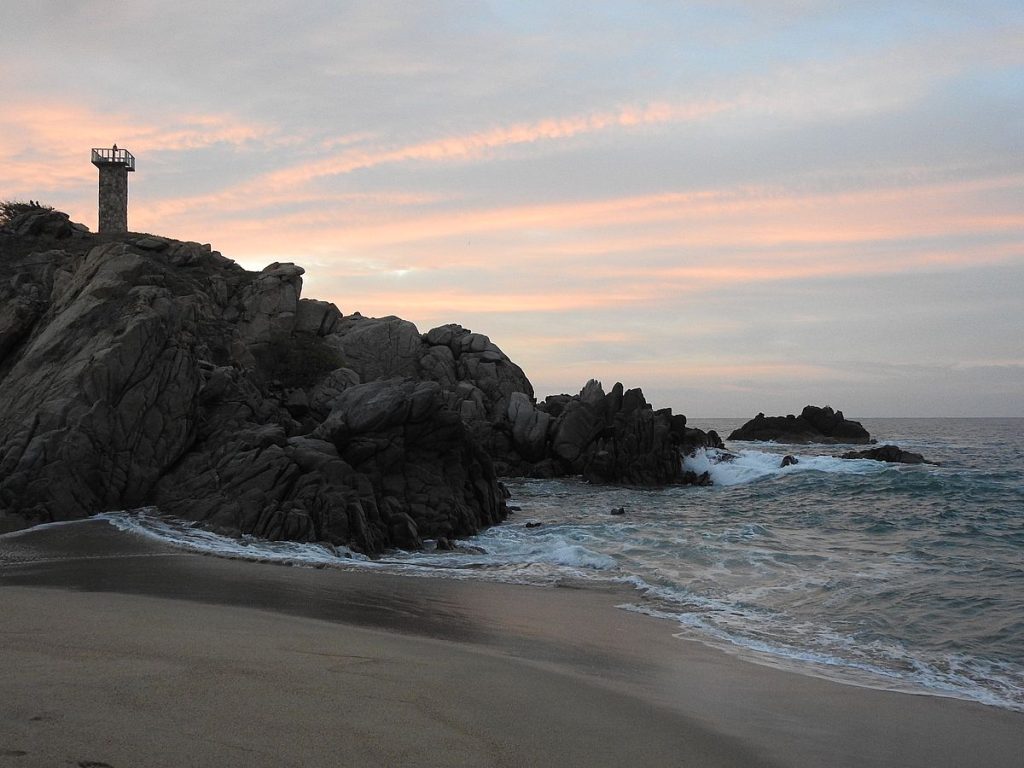
As I follow the beach past the lighthouse on its point of rocks, I stop to scan the boulders. There are four special birds I always keep an eye out for along the rocky parts of Huatulco’s coastline: American oystercatcher (Haematopus palliatus), ruddy turnstone (Arenaria interpres), wandering tattler (Tringa incana), and surfbird (Calidris virgata). None of them are common here, and almost always I search the wave-beaten rocks in vain. This morning, the only thing I find is a lone brown pelican (Pelecanus occidentalis) perched in the distance.
The ocean and the Río Coyula
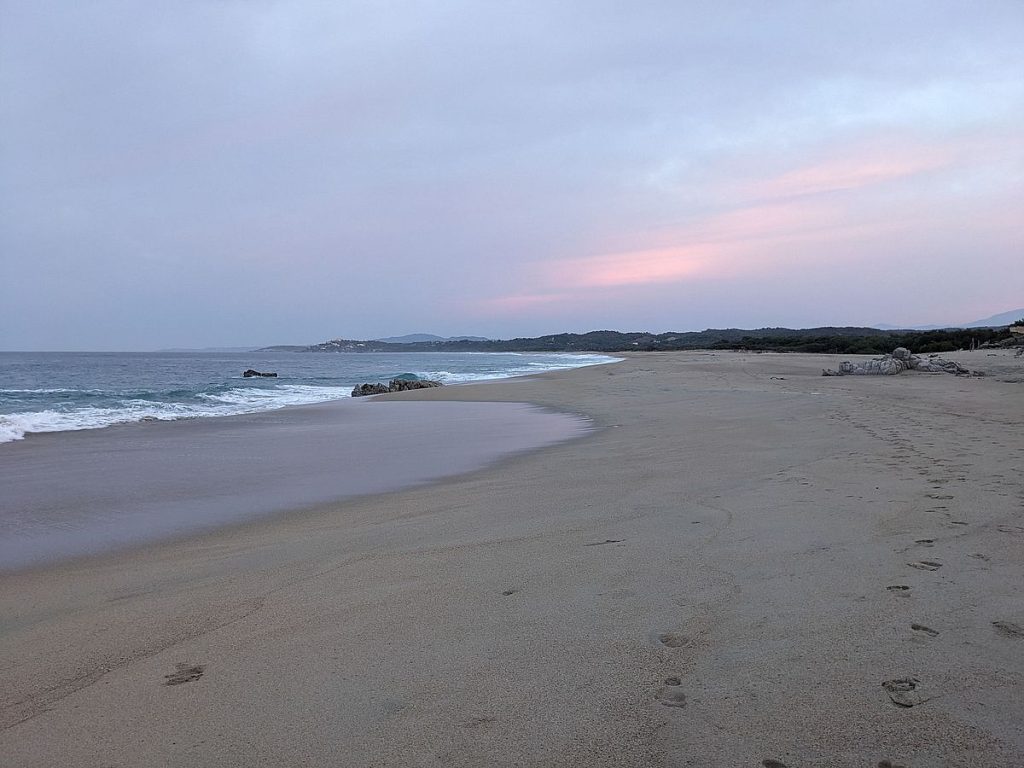
Ahead of me the steep, wave-hammered beach continues three kilometers towards Huatunalco. There are no hotels on this beach, no houses, and only rarely a dog. The sea turtles nest here, and sometimes collared plovers (Anarhynchus collaris) and Wilson’s plovers (A. wilsonia) hide in the expanse of sand.
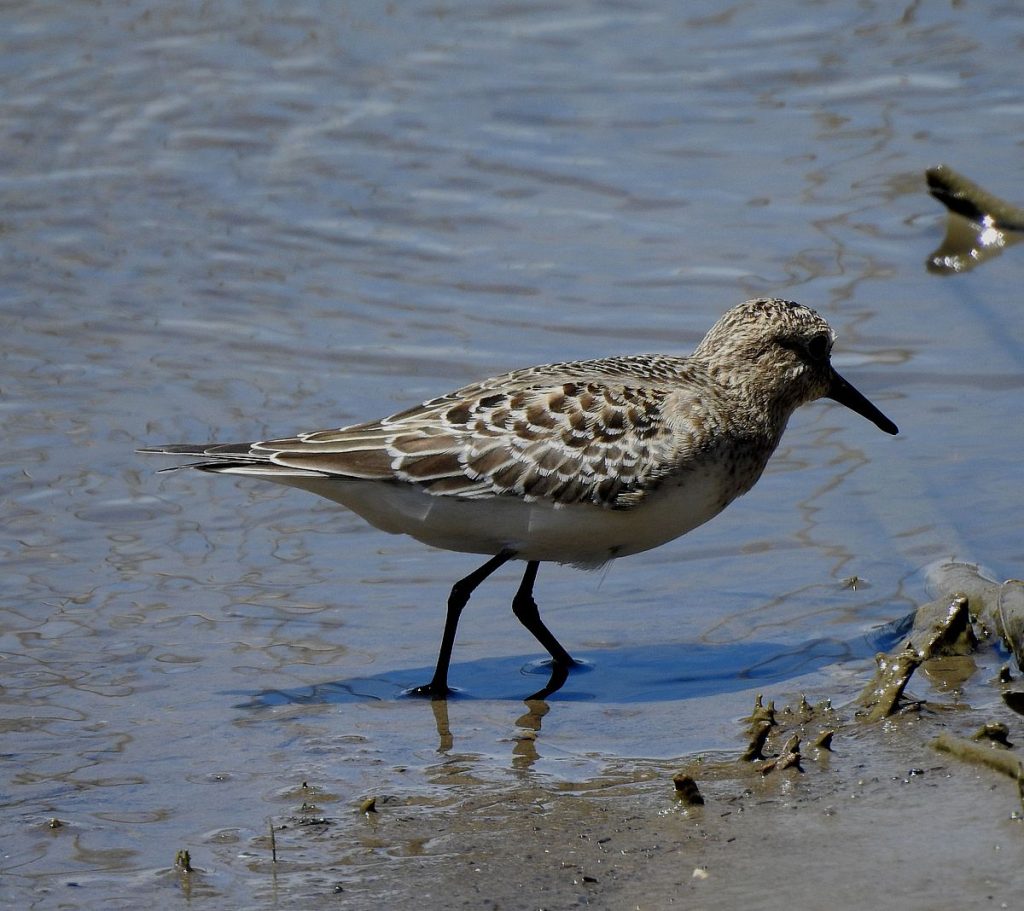
I turn inland and meet the river at a bend. This is the upstream end of the lagunita, where the Río Coyula meets the influence of the tides. The brackish water is shallow and the sandy shores slope gently into it. The mudflats that appear at low tide are still underwater, but there’s already a concentration of birds here: black-necked stilts (Himantopus mexicanus), spotted sandpipers (Actitis macularis), a green heron (Butorides virescens), a greater yellowlegs (Tringa melanoleuca). A few Baird’s sandpipers (Calidris bairdii) are foraging in the sand, long-winged tan shorebirds in the middle of an epic journey from their arctic breeding grounds to their winter range among short grasses and muddy ponds in the South American Andes.
A wandering tattler
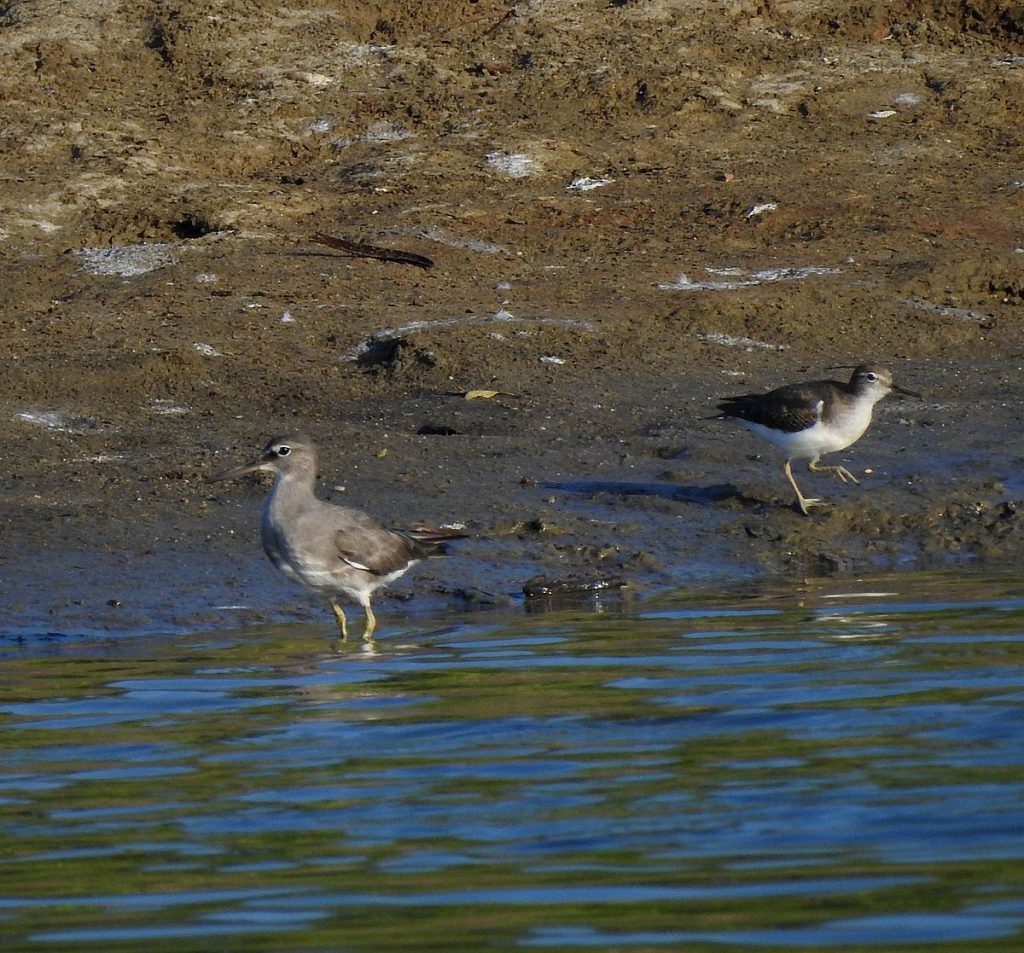
Something arrives that I don’t recognize, a slender shorebird with all-gray wings and a striking white line in front of the eye. It’s about the size of a lesser yellowlegs (Tringa flavipes), bobbing its tail as if it were an oversized spotted sandpiper. This is a wandering tattler, one of the birds I was searching for in the rocks near the lighthouse. I’ve been watching for tattlers these last two winters I’ve spent in Huatulco, but this is the first time I’ve ever seen one.
This is a bird that nests in the glaciated mountains of Siberia, Alaska and adjacent Canada. After nesting season, its migration fans out across the vastness of the Pacific Ocean: the nonbreeding range extends from New Zealand to Fiji, from the Marshall Islands to Hawaii, from southern British Columbia to the Galápagos Islands. Some tattlers fly 12,000 kilometers across the ocean. And today, this one is here, not in the rocks like I would have expected, but in the sand where the Río Coyula becomes a brackish lagunita.
Silent swallows
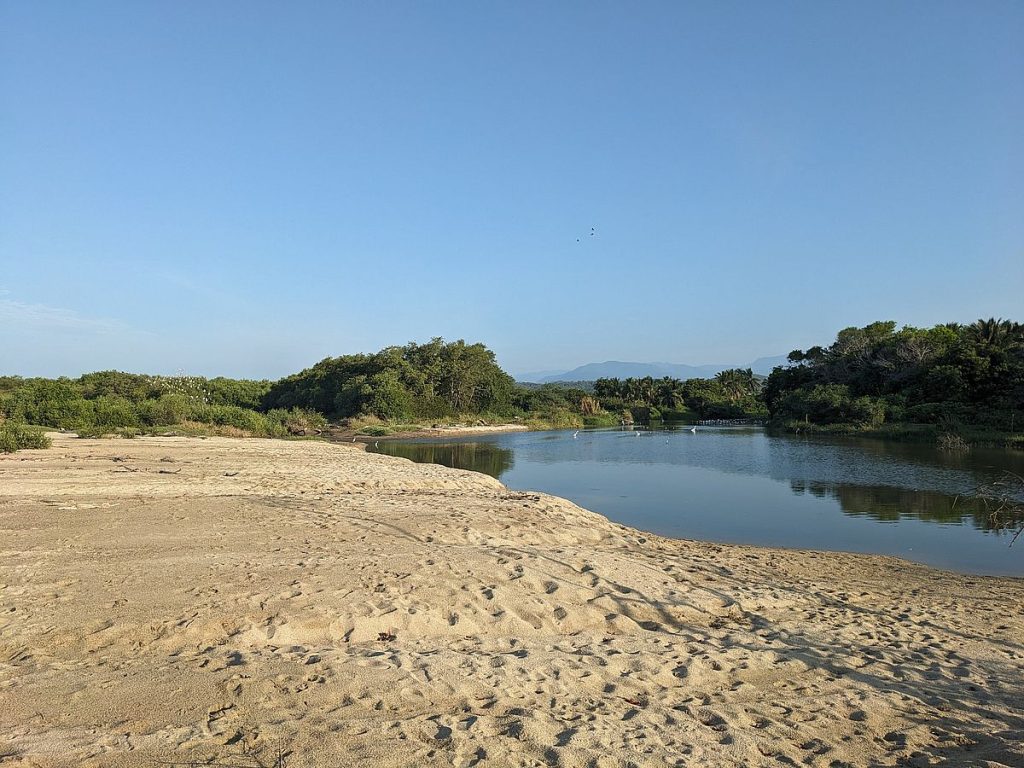
The curve of the river is a noisy, bustling place. One of the Baird’s sandpipers flies past, giving its hoarse trill. A least sandpiper (Calidris minutilla) follows not far behind with its more musical, ascending call. But what you can’t hear are the swallows. They come in flurries, 10 swallows, pause, 30 more, pause, another loose group of 15. They aren’t calling at all and only rarely one dallies in a tight circle to snag a passing insect: these swallows are on the move.
By the time I spot a group approaching, I have about one second to yank my binoculars skywards and get on them before they’re past me, making a beeline east, parallel to the coast. It’s a line that points towards the Isthmus of Tehuantepec and then Guatemala, a route about whose details I have absolutely no clue, a route whose final destination may be as far away as São Paulo or Buenos Aires.
The migration of the swallows
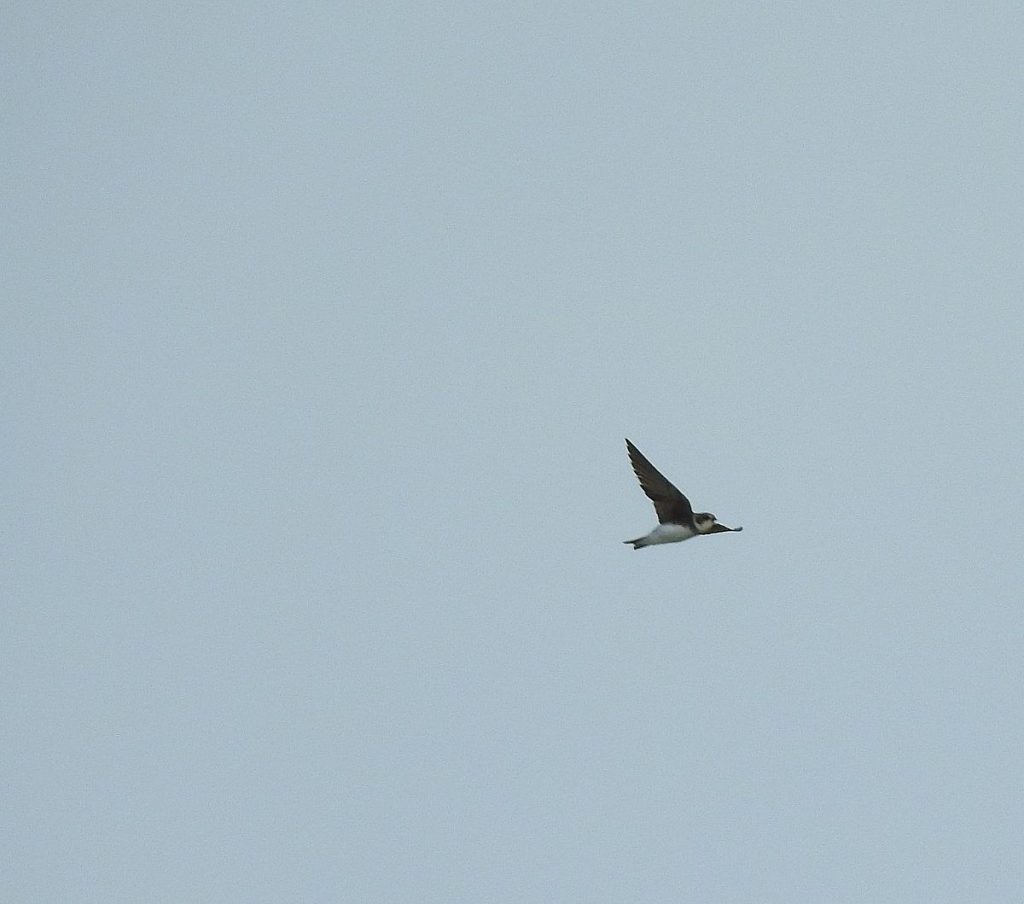
Today, most of my fleeting glimpses are of slender bank swallows (Riparia riparia) with their dark breast bands, a few handfuls of dark-headed cliff swallows (Petrochelidon pyrrhonota). Many of them pass too fast or too distant, and I have to leave them unidentified. Or I’m distracted by something else as I try to record the calls and behaviors around me, attentive for new arrivals and movements.
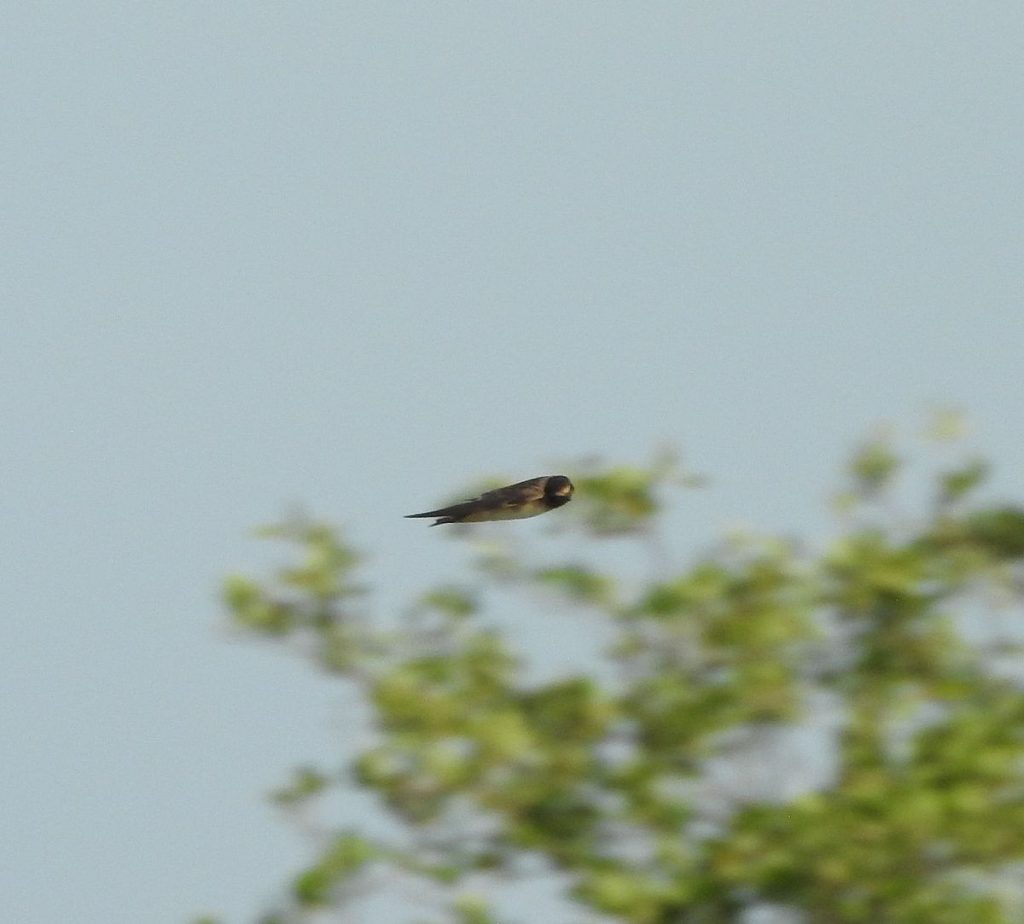
I lost track of the wandering tattler for a while but now it’s back, calling as it flies across the river. The call is a fast, bell-like series of peeps that reminds me vaguely of a yellowlegs. It lands on the sandy shore near a spotted sandpiper and continues searching for food.
Another group of swallows is zooming past now, but suddenly I don’t have time to check them. Something odd in the distance has caught my attention. At first glance I think it’s got to be a frigatebird with that striking black-and-white body, but it seems too slender. And as soon as I lift the binoculars, I know that this is no frigatebird: long, thin wings, black flight feathers emerging from white wing coverts, long tail streamers. The swallow-tailed kite (Elanoides forficatus) flaps fluidly over the mangroves, following along the flight line of the swallow flocks but angling a bit more inland. I’ve never seen a swallow-tailed kite before, and it wasn’t even on my radar for fall migration here. I know right away that this is pretty rare, and I hurry to undo the broken zipper of my camera bag and take as many photos as I can.
Swallow-tailed kite migration
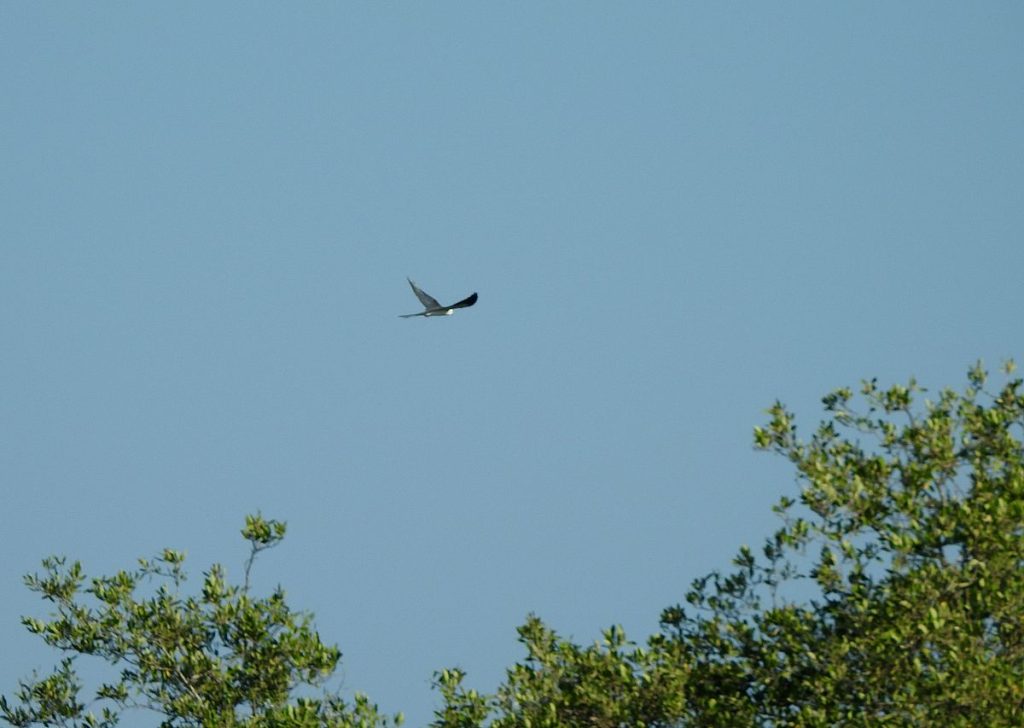
In less than 30 seconds, the kite is beyond me. I’m left checking range maps and wondering. Based on its migratory behavior, I suppose this kite is probably from the population that breeds in the United States, from Georgia to Florida and Louisiana. There are also swallow-tailed kites that breed in Chiapas and parts of Central and South America, but it would seem even less likely for one of those birds to wander up here. And this bird isn’t acting like a wanderer: it’s moving rapidly and purposefully, migrating along the path of the swallows.
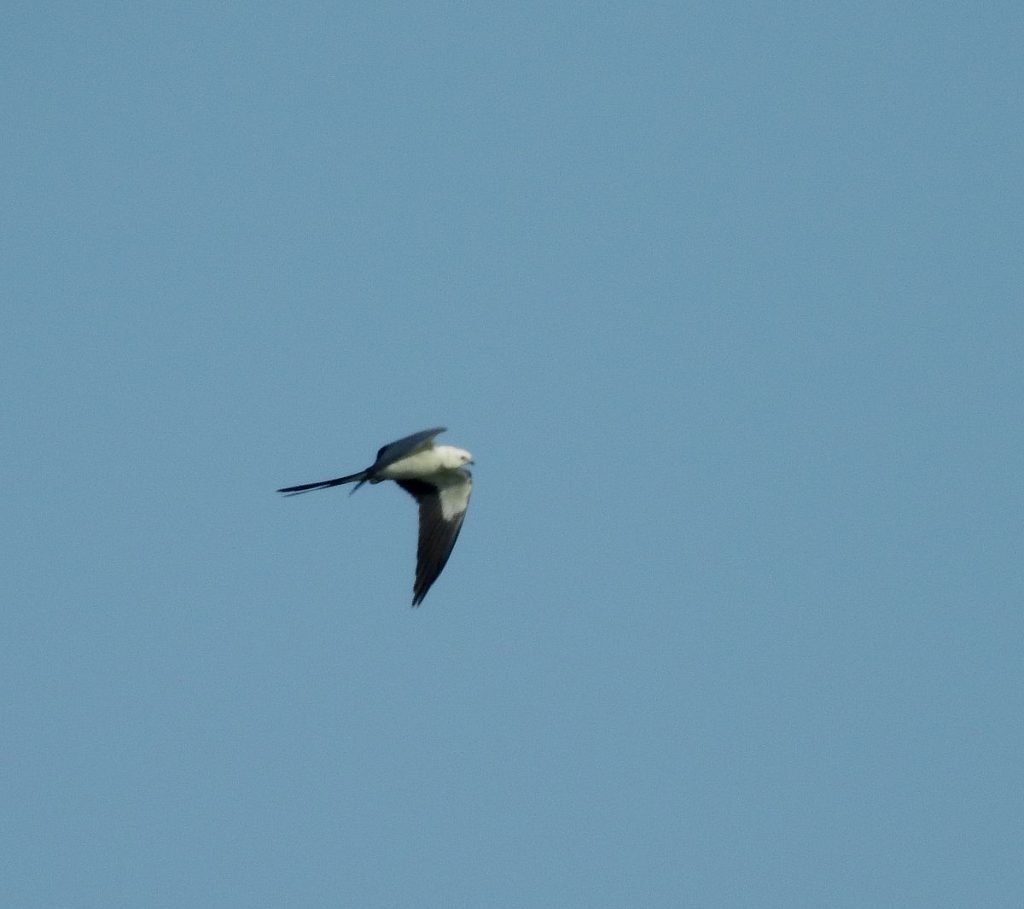
In fall migration, many US swallow-tailed kites cross the Gulf of Mexico to the Yucatán Peninsula. It’s a flight of over 500 kilometers from the southern tip of Florida to the narrow finger of the Guanahacabibes Peninsula at the western extreme of Cuba, where ornithologists observing fall raptor migration from the Cabo de San Antonio have documented up to 2,800 swallow-tailed kites—60% of the entire US population—flying past during the fall migration season.
From the Cabo de San Antonio, it’s 200 kilometers more across the ocean to make landfall on the Yucatán Peninsula. The kites that don’t take this overwater route apparently make an arc around the Gulf of Mexico, from Texas through Veracruz. Nothing suggests that it’s normal to find one on the Pacific coast of Oaxaca, 350 kilometers away from the coast of Veracruz across pastures, milpas and selvas, rugged mountains and chasms, eroded scrublands. I wonder about this bird’s story. Where is it coming from, and how did it get here? Is it a young bird that took a wrong turn?
Glimpses of fall migration
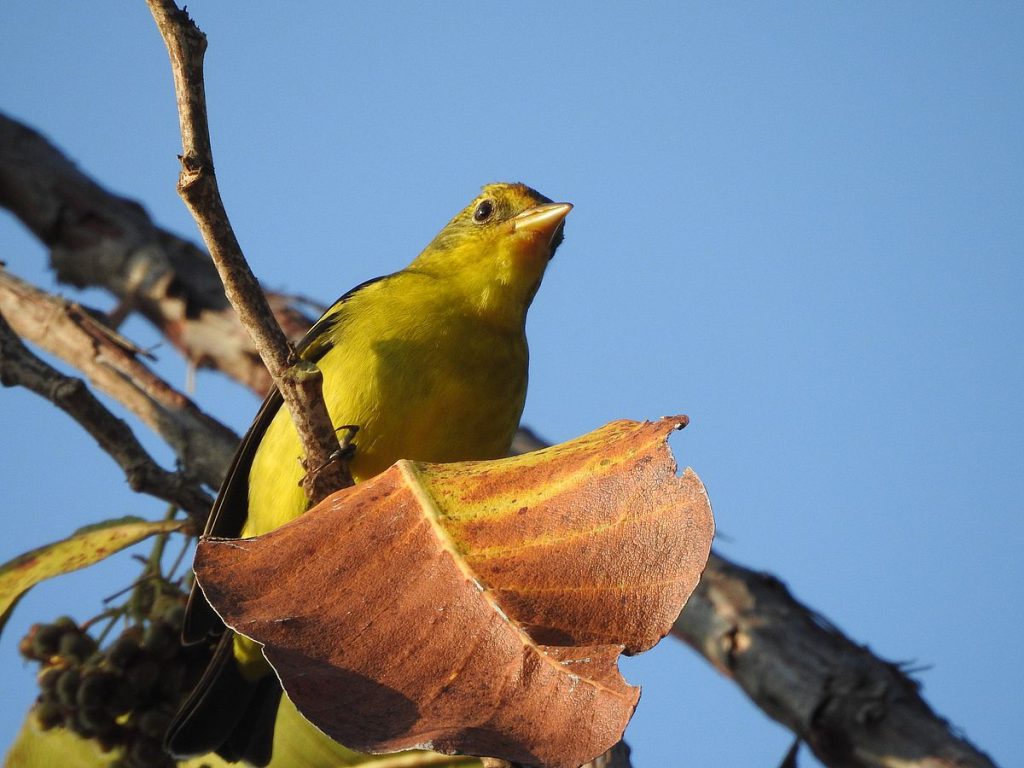
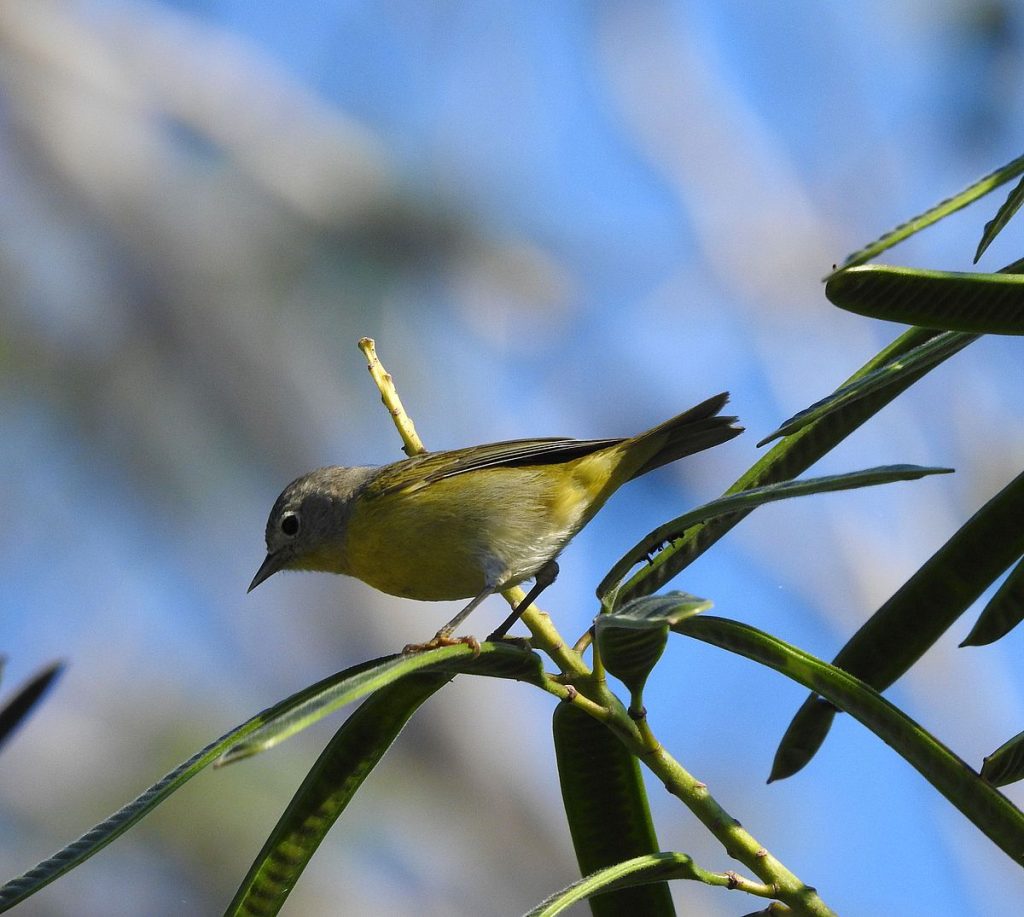
This year for the first time, I get to be in Oaxaca for the full progression of fall migration, and I have lots of questions. Where in my local geography do migratory birds concentrate? What can I observe this year, not just of the migratory species that will spend the winter here—Nashville warblers (Leiothlypis ruficapilla) and western tanagers (Piranga ludoviciana), black-necked stilts and blue-winged teals (Spatula discors), orchard orioles (Icterus spurius) and indigo buntings (Passerina cyanea)—but also of the birds like this kite that are clearly passing through, en route to spend the winter in Central or South America? Are there places where there’s a better chance of spotting a rare, off-course migrant?
I assume the Pacific coast of Oaxaca must concentrate migrants. Species like bank and cliff swallows, avoiding the dangers of flying across the open ocean, may stack up along the coastline. Meanwhile, in the dry central valleys, I imagine that many migrants may show up in the comparatively moist vegetation along rivers and reservoirs, where food and shelter may be more abundant. And I’m well aware that many species of migrating warblers pass through the Oaxacan tropical lowlands adjacent to Veracruz and the Gulf of Mexico, a region I haven’t been able to visit yet. But is this general sketch at all accurate?
Rest-roost sites and stopovers
I start reading a 2018 review by an international team of bird migration researchers led by Nick Bayly, Director of Migratory Ecology for the Colombian nonprofit SELVA. The review, titled “Major stopover regions and migratory bottlenecks for Nearctic-Neotropical landbirds within the Neotropics,” rapidly shows me that much more is going on here than meets the eye.
During migration, many birds—such as thrushes and warblers—tend to fly in the night, stopping to rest during the day. Others, like hawks, swallows, and swallow-tailed kites, fly by day and stop at night. But for both types of migrants, Nick and his colleagues emphasize that many of these stops are brief, what they call “rest-roost stops”: a safe place to sleep, maybe a bite to eat, and then onwards. This contrasts with what they call “stopover sites,” places where birds take a much longer break during their migration, staying for various days and feeding heavily to build up fat reserves for the next leg of the journey. Let’s hear from Nick:
“In reality, a growing body of evidence suggests that individual landbirds often make long stopovers at just three or four key areas along their migratory routes, areas where they accumulate large energy reserves. This finding highlights an urgent need to identify major stopover regions and assess the needs of birds within them. This need is magnified in the Neotropics where the funnel-shaped geography of Mexico and Central America acts as a bottleneck, concentrating the routes of millions of migratory landbirds.”
The bottleneck effect
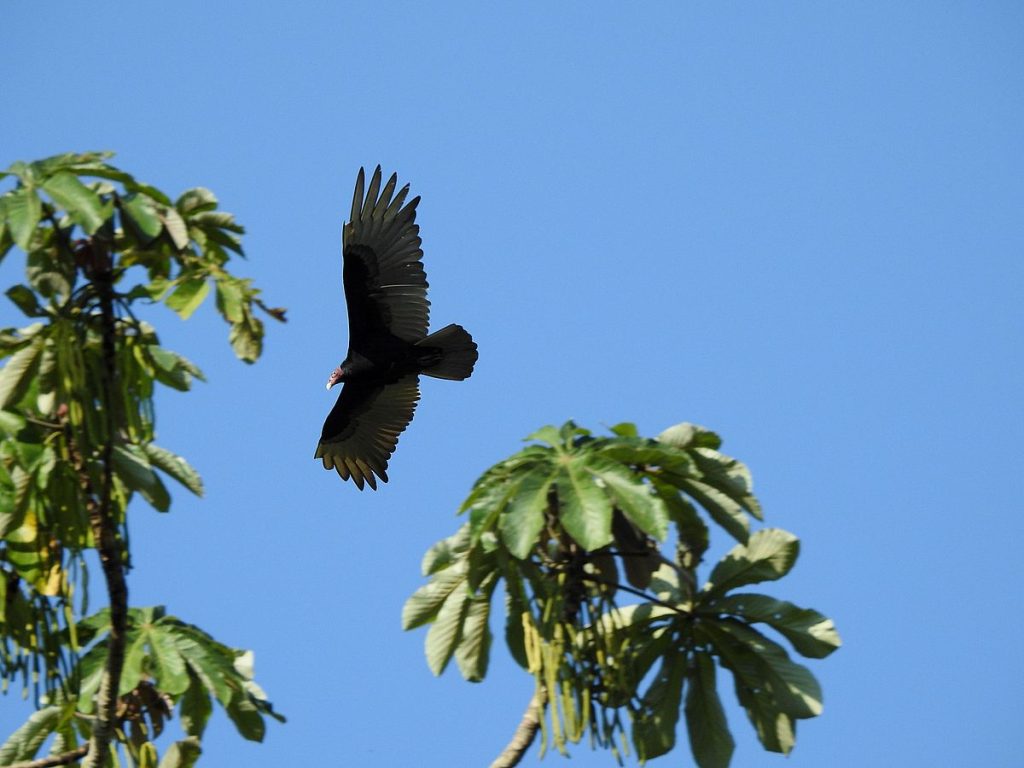
This bottleneck effect is well-studied for hawks, vultures, and other day-migrating raptors, over 5 million of them in total. Just four species make up the bulk of this migration: 2.1 million broad-winged hawks (Buteo platypterus). 2 million turkey vultures (Cathartes aura). 1.2 million Swainson’s hawks (Buteo swainsoni). 200,000 Mississippi kites (Ictinia mississippiensis). Migrating over land, they funnel through the narrow coastal plain of Veracruz, constricted between the Sierra Madre Oriental and the Gulf of Mexico. From there, many cross the Isthmus of Tehuantepec in Oaxaca and continue down the Pacific coast of Central America; others follow the Caribbean coastline to South America.
Farther along the migration route, where the narrow funnel of Central America meets the bulk of South America, is Colombia’s Darién region, an area that concentrates not just raptors but also other daytime migrants. In 2014, Nick Bayly and colleagues counted an astounding 158,000 cliff swallows that passed by the village of Sapzurro, on the Caribbean coast of the Darién, during the course of fall migration. For eastern kingbirds (Tyrannus tyrannus) that same fall, they counted 243,000.
What about the nocturnally migrating songbirds? Many of them arrive at the Yucatán Peninsula following routes similar to those used by the swallow-tailed kites, by sea across the Gulf of Mexico or by land via Veracruz. But studies indicate that many of these birds don’t make a long stopover on the Yucatán, just a quick rest-roost pause.
In general, stopover sites for nocturnal migrants are still poorly known—and of course they may differ greatly from one species to another. There are suggestions that western Mexico and certain areas of Central America may prove to be important for various species, but much more research is needed.
A stopover in Colombia
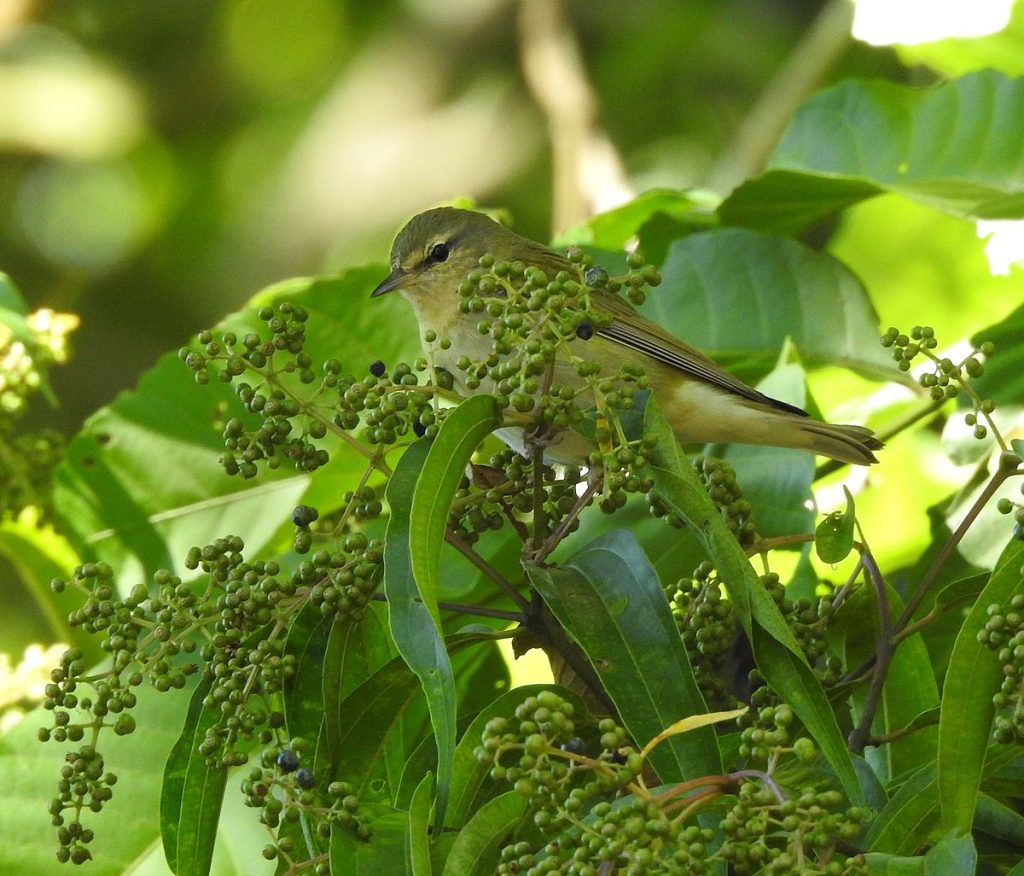
Perhaps the most tantalizing information so far, however, comes from the Sierra Nevada de Santa Marta in Colombia, which rises abruptly from the Caribbean coast near the city of Santa Marta. In the tropical forests of the Caribbean-facing foothills, Nick Bayly and colleagues found that veeries (Catharus fuscescens) in fall migration stopped over for an average of nine days, building up sufficient fat reserves to give them a flight range of 2,000 kilometers towards their South American winter range. In spring migration, they documented long stopovers for gray-cheeked thrushes (Catharus minimus) and Tennessee warblers (Leiothlypis peregrina), giving the thrushes enough flight range to make a marathon journey across the Caribbean to North America and allowing the Tennessee warblers to make it as far as northern Central America. Let’s hear from Nick again:
“Contrary to the widely held vision of migratory landbirds making regular stopover along their migratory route, these recent results from Colombia suggest that migratory landbirds are capable of adopting a strategy much more similar to that of several shorebirds, in which they depend on just a small number of sites to store large fuel reserves that power nonstop, long-distance flights. Another key lesson from studies in Colombia is that migratory landbirds are far more abundant in certain stopover habitats (such as tropical pre-montane forest) relative to others and that different habitats support different fueling opportunities and rates. This variability in refueling opportunities will likely make the difference between individuals successfully crossing a water barrier, like the Caribbean Sea, or needing to take a longer route or make additional stopovers.”
Migration in Oaxaca
Wow! I have so many questions still. What might these findings mean for fall migration in Oaxaca? There’s so much more to learn, but now at least I have a broader context for what I’m seeing here. I think about birds like the bank swallows and the swallow-tailed kite, passing by rapidly in active migration. I continue to suspect that the barrier of the Pacific Ocean is acting as a bottleneck for them—though the concentrations I’ve seen so far seem to pale in comparison to the unimaginable hundreds of thousands that fly over Colombia’s Darién.
As for the night-migrating songbirds, it’s still early in the season, and many of them have yet to pass by—but now I’ll be asking myself whether the warblers, thrushes, and vireos I see are making a quick rest-roost pause or a longer, biologically critical refueling stopover. I wonder if there are habitats in Oaxaca’s Sierra Sur or Sierra Norte, away from the obvious barriers of the Pacific Ocean and the Gulf of Mexico, that might be important stopover sites for nocturnal migrants on the way towards Central and South America.
How do we know all of this?
Careful observation with binoculars and a camera can only tell us so much, of course. These simple techniques can allow us to document the daytime movements of swallows and swallow-tailed kites, for instance. They can also give us clues about behaviors and rest-roost or stopover sites. But the developing picture of migration ecology I’m learning about from Nick is the fruit of an impressive international collaboration.
This includes visual observations by birders like me as well as projects by carefully trained biologists who capture individual birds, mark them with an aluminum leg band, measure their fat stores, and release them unharmed. These bird banding projects, which I’ve covered in past episodes, allow us to identify individual birds and directly observe how long they stay at a stopover site and how quickly they’re gaining fat. And finally, in recent years, lightweight tracking technologies such as geolocators, Motus, and cellular tracking tags are giving us direct evidence of the marathon flights many of these species make.
Nick Bayly tells me that some of these nonstop flights have covered up to 3,500 kilometers.
Birds on the mudflats
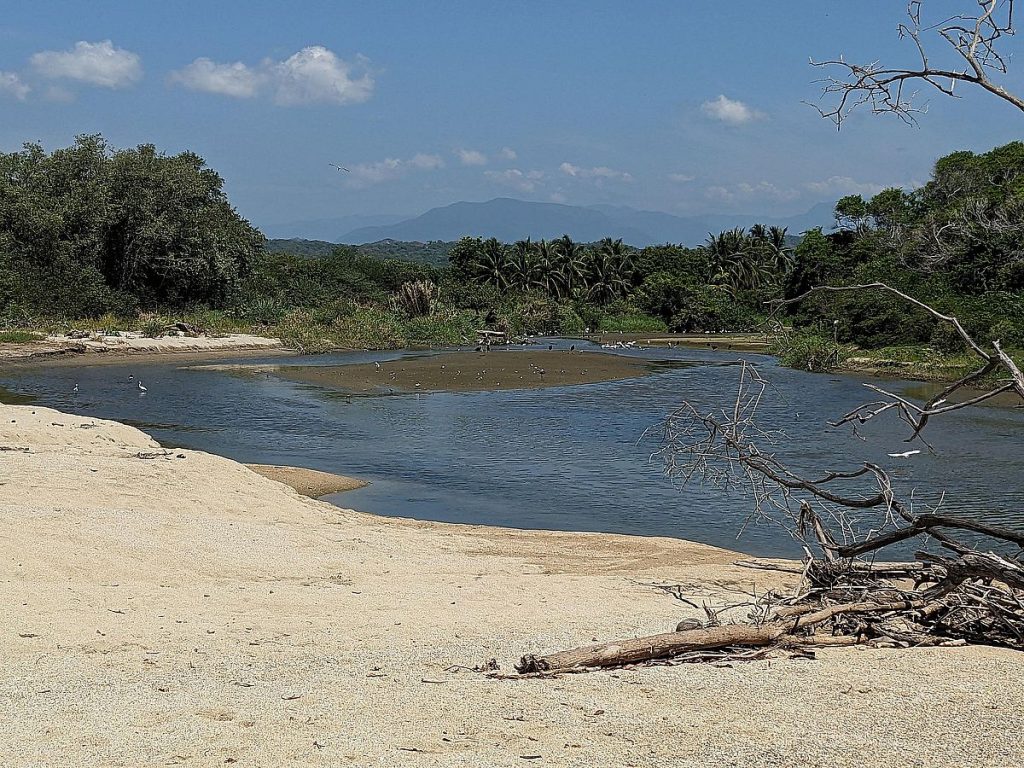
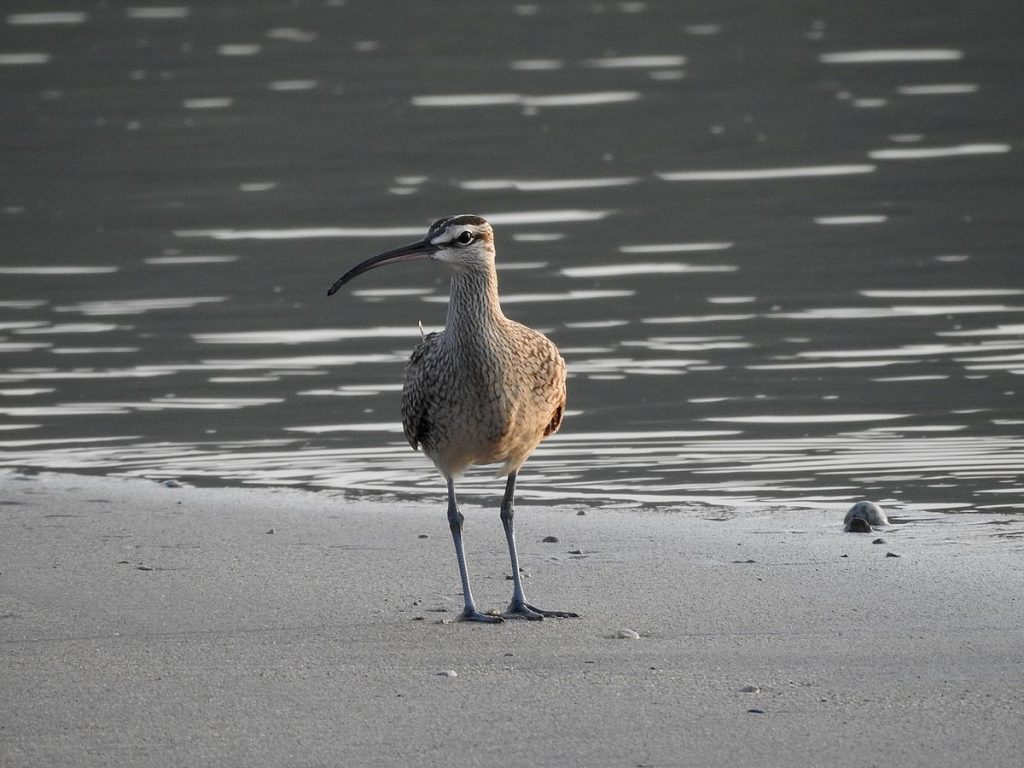
The tide has lowered noticeably now and the mudflats in the middle of the river are exposed. The bird activity is constant. Two Hudsonian whimbrels (Numenius hudsonicus) take off from the river’s edge, flying southeast towards the lighthouse and the ocean. A flock of roseate spoonbills (Platalea ajaja) is foraging in the shallow water. I record them from my shady observation spot under a lone mangrove. They grunt lightly as they strain brackish water through their flattened bills. The black-necked stilts keep calling in the background.
It’s 10:30 am now and the sun has gotten intense. Barely a single swallow has passed since 8:00 am, but I stay a bit longer underneath the mangrove, searching among the egrets and spoonbills with my spotting scope, checking the sky for migrants, wondering what else might pass by.
It’s early still in fall migration, and anything could happen.
Further reading
Bayly, N.J., Gómez, C., Hobson, K.A., González, A.M., & Rosenberg, K.V. (2012). Fall migration of the veery (Catharus fuscescens) in northern Colombia: determining the energetic importance of a stopover site. Auk 129(3):449-459. https://academic.oup.com/auk/article/129/3/449/5148705
Bayly, N.J., Gómez, C., & Hobson, K.A. (2013). Energy reserves stored by migrating gray-cheeked thrushes Catharus minimus at a spring stopover site in northern Colombia are sufficient for a long-distance flight to North America. Ibis 155(2):271–283. https://doi.org/10.1111/ibi.12029
Bayly, N.J., Cárdenas Ortiz, L., Rubio, M. & Gómez, C. (2014). Migration of raptors, swallows and other diurnal migratory birds through the Darién of Colombia. Ornitología Neotropical 25:63–71. https://digitalcommons.usf.edu/cgi/viewcontent.cgi?article=2185&context=ornitologia_neotropical
Bayly, N.J., Gómez, C., Hobson, K.A., & Rosenberg, K.V. (2016). Prioritizing tropical habitats for long-distance migratory songbirds: an assessment of habitat quality at a stopover site in Colombia. Avian Conservation and Ecology 11(2):5. http://dx.doi.org/10.5751/ACE-00873-110205
Bayly, N.J., Rosenberg, K.V., Easton, W.E., Gómez, C., Carlisle, J., Ewert, D.N., … Goodrich, L. (2018). Major stopover regions and migratory bottlenecks for Nearctic-Neotropical landbirds within the Neotropics: a review. Bird Conservation International 28(1): 1–26. https://doi.org/10.1017/S0959270917000296
Bildstein, K.L. (2004). Raptor migration in the Neotropics: patterns, processes, and consequences. Ornitología Neotropical 15(Suppl.):83–99. https://digitalcommons.usf.edu/cgi/viewcontent.cgi?article=1471&context=ornitologia_neotropical
Gill, R.E., McCaffery, B.J., & Tomkovich, P.S. (2020). Wandering tattler (Tringa incana), version 1.0. In Birds of the World (A.F. Poole & F.B. Gill, eds). Ithaca, NY, USA: Cornell Lab of Ornithology. https://doi.org/10.2173/bow.wantat1.01
Meyer, K.D. (2020). Swallow-tailed kite (Elanoides forficatus), version 1.0. In Birds of the World (A.F. Poole & F.B. Gill, eds). Ithaca, NY, USA: Cornell Lab of Ornithology. https://doi.org/10.2173/bow.swtkit.01
Moskoff, W. & Montgomerie, R. (2020). Baird’s sandpiper (Calidris bairdii), version 1.0. In Birds of the World (A.F. Poole & F.B. Gill, eds). Ithaca, NY, USA: Cornell Lab of Ornithology. https://doi.org/10.2173/bow.baisan.01
Pérez Hernández, A., Llanes Sosa, A., & de la Cruz Mora, J.M. (2020). Migración del gavilán cola de tijera (Elanoides forficatus) en la península de Guanahacabibes, Cuba. Huitzil 21(1): e540. https://www.scielo.org.mx/scielo.php?script=sci_arttext&pid=S1870-74592020000100102